Pairing protein with fiber at every meal slows digestion, steadies blood sugar, and helps close two common nutrition gaps. Here are practical combinations that work.
Protein gets most of the nutrition attention these days, but fiber is quietly catching up. The more interesting story is what happens when you eat them together. Neither nutrient does its best work alone, and a meal that combines the two can hold you over in ways that either one wouldn't manage on its own.
Why the pairing beats either nutrient alone
Protein and fiber each bring something different to the table. Their real value shows up when they share a plate.
Protein is satiating. It triggers hormones that signal fullness, and it digests more slowly than refined carbohydrates. A protein-heavy meal keeps you satisfied well after your last bite.
Fiber extends that effect. Soluble fiber, found in oats, beans, apples, and chia seeds, absorbs water and forms a slow-moving gel in the digestive tract. That gel delays stomach emptying. A meal built around both nutrients doesn't just feel filling when you eat it. It stays with you.
Pair them on purpose and you're far less likely to end up in the pantry an hour later.
Steadier blood sugar, not just a fuller stomach
Refined carbohydrates like white bread, sweetened cereal, and saltine crackers can push blood sugar up fast when eaten alone. Add protein and fiber and the curve flattens. Fiber slows how quickly sugar enters the bloodstream, and protein blunts the post-meal spike. Some research even suggests that eating protein and vegetables before the carbohydrate portion of a meal may lower the glucose response further. That's a simple habit with a real payoff, and it costs nothing to try.
The practical result is steadier energy through the day instead of the familiar mid-afternoon crash.
What fiber does for your gut and long-term risk
Fiber feeds the beneficial bacteria in your colon. When those microbes break down certain fibers, they produce short-chain fatty acids, compounds that nourish the cells lining the gut and support immune function.
The wider picture is just as relevant. Research consistently links higher fiber intake with lower risk of heart disease, type 2 diabetes, and colorectal cancer. These are associations, not proof of cause and effect. Still, the pattern is strong and consistent enough that health organizations broadly recommend eating more fiber.
The problem is that most people aren't getting enough. The generally recommended intake is about 25 grams a day for women and 31 to 34 grams for men. Fewer than one in 10 adults hit that target.
Protein needs vary with age, body weight, and activity level. Research suggests that spreading protein across meals, rather than loading it at dinner, can better support muscle maintenance, especially for adults over 50. Pairing a protein source with a high-fiber food at every meal addresses both gaps at once, and that's why this approach is so efficient.
Pairings worth building meals around
The goal is straightforward: aim for a meaningful protein source and a fiber-rich food at every meal and snack. Here's how that looks in practice.
Breakfast
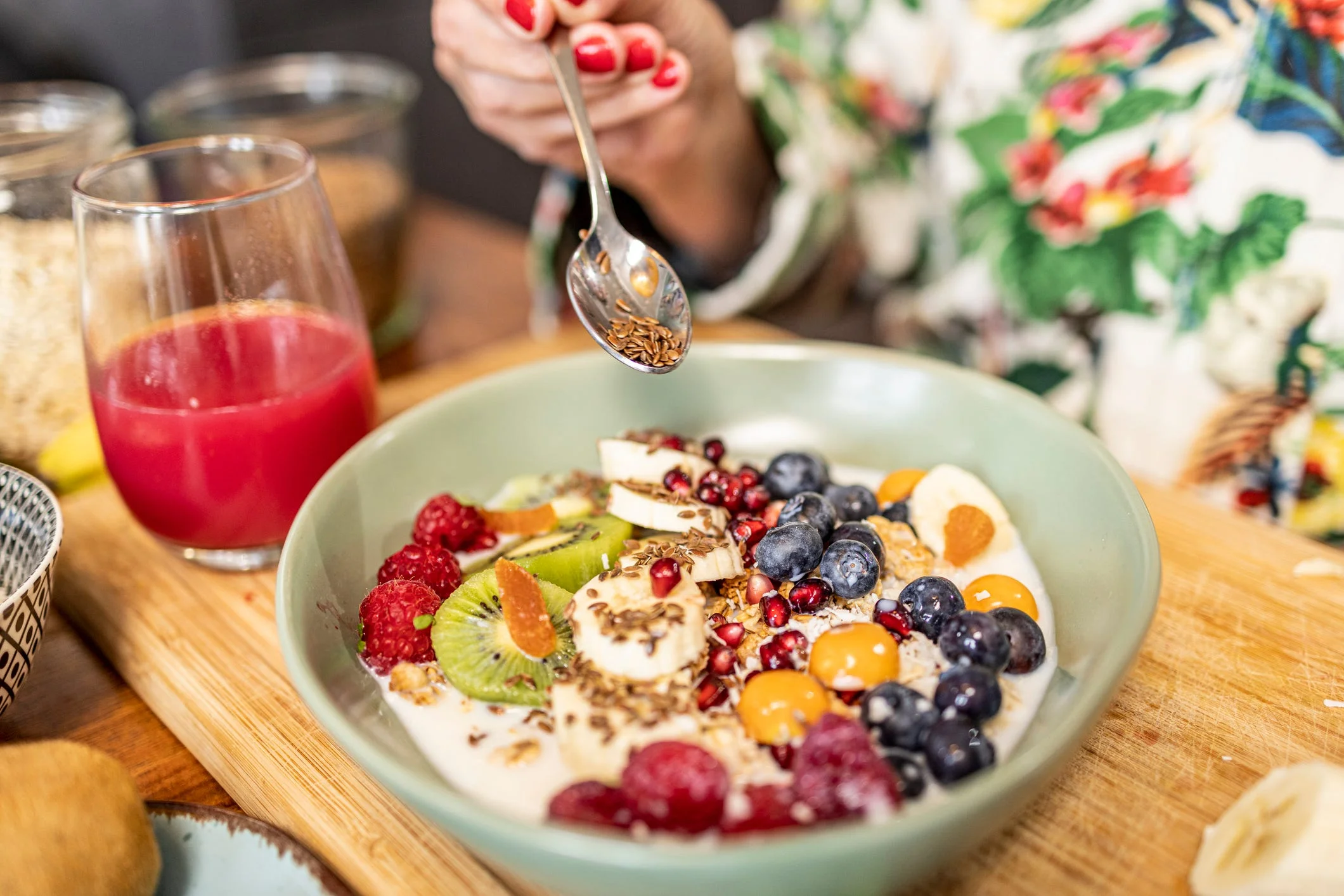
- Plain Greek yogurt with raspberries and chia seeds. A 7-ounce container of plain nonfat Greek yogurt delivers about 20 grams of protein. Add a cup of raspberries (about 8 grams of fiber) and a tablespoon of chia seeds (about 4 grams), and you've covered both nutrients before 9 a.m.
- Eggs with black beans and sautéed spinach. Two eggs provide roughly 12 grams of protein. A half cup of black beans adds about 7 grams of protein and 7 to 8 grams of fiber, which makes beans one of the most efficient pairing ingredients you can buy.
- Oatmeal made with milk or soy milk, topped with walnuts. Oats bring the fiber. Swapping water for dairy or soy milk adds protein, and a handful of walnuts contributes healthy fat and extra staying power.
Lunch and dinner
- Lentil soup or lentil salad. Lentils pair protein and fiber within a single ingredient. A cooked cup offers about 18 grams of protein and 15 grams of fiber, so a bowl built around them does most of the work for you.
- Salmon with quinoa and roasted broccoli. A 4-ounce piece of salmon brings over 20 grams of protein. Quinoa adds another 8 grams of protein and 5 grams of fiber, and a cup of cooked broccoli contributes 5 more grams of fiber. This plate hits every mark.
- Chicken stir-fry over brown rice with vegetables. The chicken supplies the protein. Snap peas, peppers, and carrots bring the fiber. Brown rice carries a bit more fiber than white.
- Tuna salad on whole-grain bread. It's reliable and affordable. Look for bread with at least 3 grams of fiber per slice.
Snacks
- Apple slices with peanut butter. A medium apple has about 4 grams of fiber, and 2 tablespoons of peanut butter contribute roughly 7 grams of protein. It's a classic for good reason.
- Cottage cheese with a sliced pear. A half cup of cottage cheese provides 12 to 14 grams of protein, and a medium pear adds 5 to 6 grams of fiber.
- Edamame. One cup of shelled edamame delivers about 18 grams of protein and 8 grams of fiber, all from a single ingredient.
- Hummus with carrots and cucumbers. Hummus offers modest amounts of both nutrients. Add a hard-boiled egg or a small handful of almonds to make the snack more substantial.
Making the habit stick
Start with what you already eat. Oatmeal at breakfast? Add a scoop of Greek yogurt or a couple of eggs on the side. A sandwich at lunch? Swap in whole-grain bread and add raw vegetables or a piece of fruit. Small adjustments to existing meals tend to last longer than a full diet overhaul.
Build meals around foods that do both jobs. Beans, lentils, chickpeas, edamame, nuts, and seeds all contain meaningful amounts of protein and fiber, so the pairing happens almost automatically.
Increase fiber gradually. If you're eating little of it now, don't double your intake overnight. Add a few grams at a time over two to three weeks and drink plenty of water. That helps fiber move through your system without the gas and bloating that often come with a sudden jump.
Keep the pantry set up for success. Canned beans (rinsed to cut sodium), frozen edamame, single-serve Greek yogurt, precooked lentils, and whole-grain bread make it easy to assemble a pairing even on your busiest days.
If you have kidney disease, a digestive disorder such as IBS, or you take medication for diabetes, check with your health care provider or a registered dietitian before making significant changes to your protein or fiber intake.
The practical takeaway
Protein has been having a moment, and fiber is clearly joining it. But this isn't a passing trend. Pairing the two is a well-supported, practical approach that works across breakfast, lunch, dinner, and snacks, and it fits almost any food preference or budget. Make the pairing your default, one meal at a time, and you'll likely notice fewer afternoon cravings and steadier energy. Whether that holds up over years is the question worth watching as more of the research matures.

Discussion
Sign in to join the discussion.