Six simple stretches can loosen travel-related stiffness, restore movement, and help you feel more comfortable after long periods of sitting or walking.

Long stretches of sitting and hurried airport walks can leave travelers stiff before the trip has even begun. The issue is less about one dramatic strain than about staying in the same positions, then asking the body to switch quickly from sitting to carrying bags or walking through a terminal. A few gentle movements offer a practical reset: they help restore motion to areas that tend to tighten during travel, from the hips and back to the calves and shoulders.
Lindsey Benoit O’Connell, C.S.C.S., founder of The LAB Wellness, says the body can feel uncomfortable when it stays in one position for hours. Stretching can be done at an airport, rest stop, or beside your seat, and pairing movement with slow breathing may also help ease travel stress. Aim to hold each position for at least 30 seconds, staying within a comfortable range. That’s a useful guideline, not a reason to push through pain; the point is to make a little room for movement, then return to your day.
Start with seated movements
Seated stretches are useful when there’s no convenient place to lie down or when you’re waiting near your gate. They also let you work on the hips and back without turning a short break into a workout. Keep your movements controlled, and give yourself enough space to avoid bumping into people or furniture.
Seated Figure Four
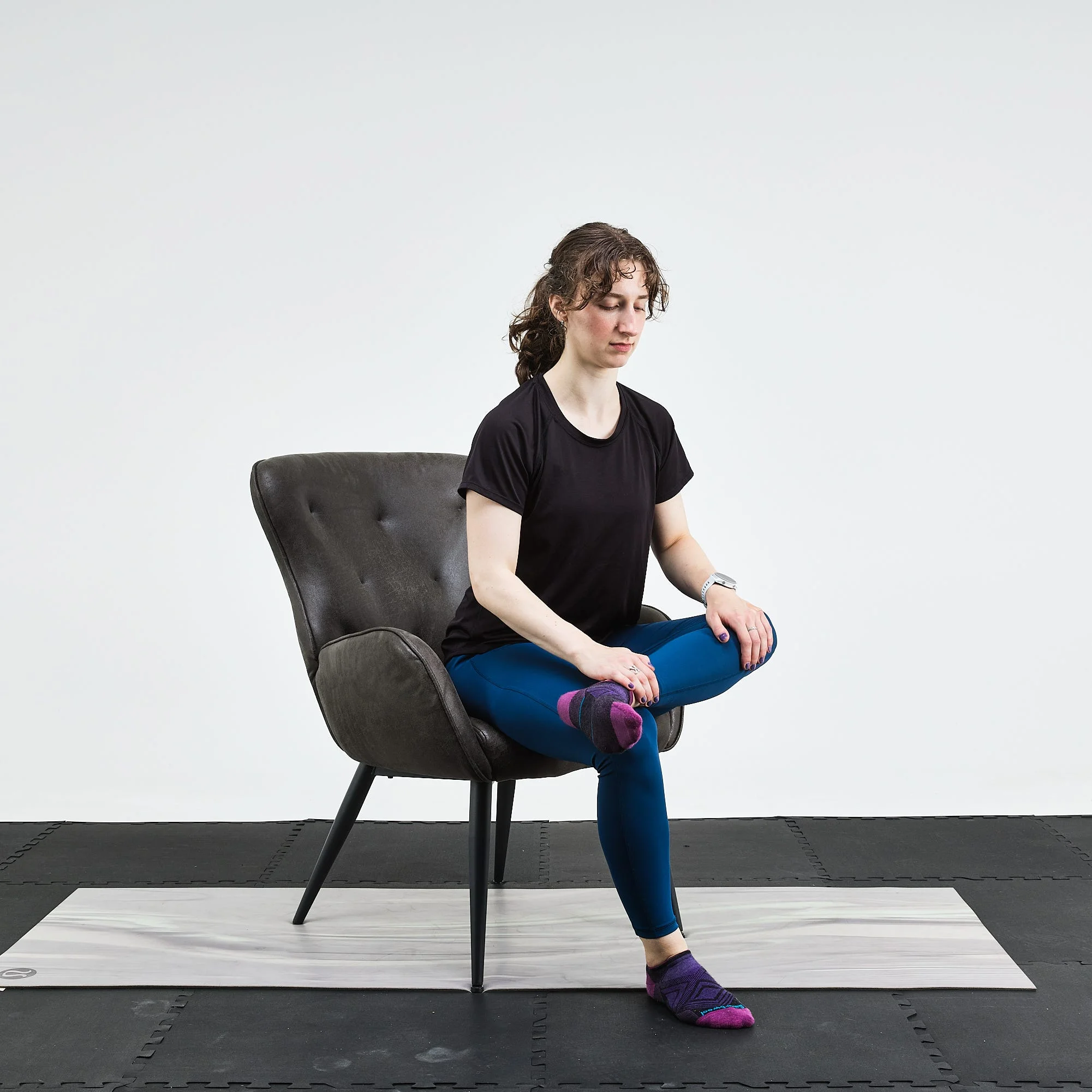
This seated position targets the outer hip and glute, areas that can feel tight after a long drive or flight. The stretch depends on a gentle forward hinge, so you don’t need to pull your leg toward you or round your back to make it work. If the crossed-leg position feels uncomfortable, adjust how far you lean.
- Sit near the front of a chair with both feet on the floor.
- Rest your right ankle across your left thigh, flex the right foot, then hinge forward gently at the hips until you feel a stretch.
- Hold for at least 30 seconds, then repeat on the other side.
Seated Spinal Rotation

A slow twist gives the back some movement after hours in a fixed position. The goal is a comfortable rotation through the torso, not a forceful turn or a contest to see how far you can reach. Let your breathing stay easy as you hold the position; if you’re seated on the ground, keep your posture supported and your feet planted.
- Sit upright on a chair, bench, or the ground, with your feet planted.
- Place your right hand on your left knee and gently turn your torso to the left.
- Hold for at least 30 seconds, then switch sides.
Take standing breaks
Standing gives you room to work on areas that may stay compressed when you sit, including the front of the hips and the calves. A rest stop or a clear patch of floor can be enough. If you’re near other travelers, keep the movements compact and choose a spot where you can balance safely.
Side-Body Reach
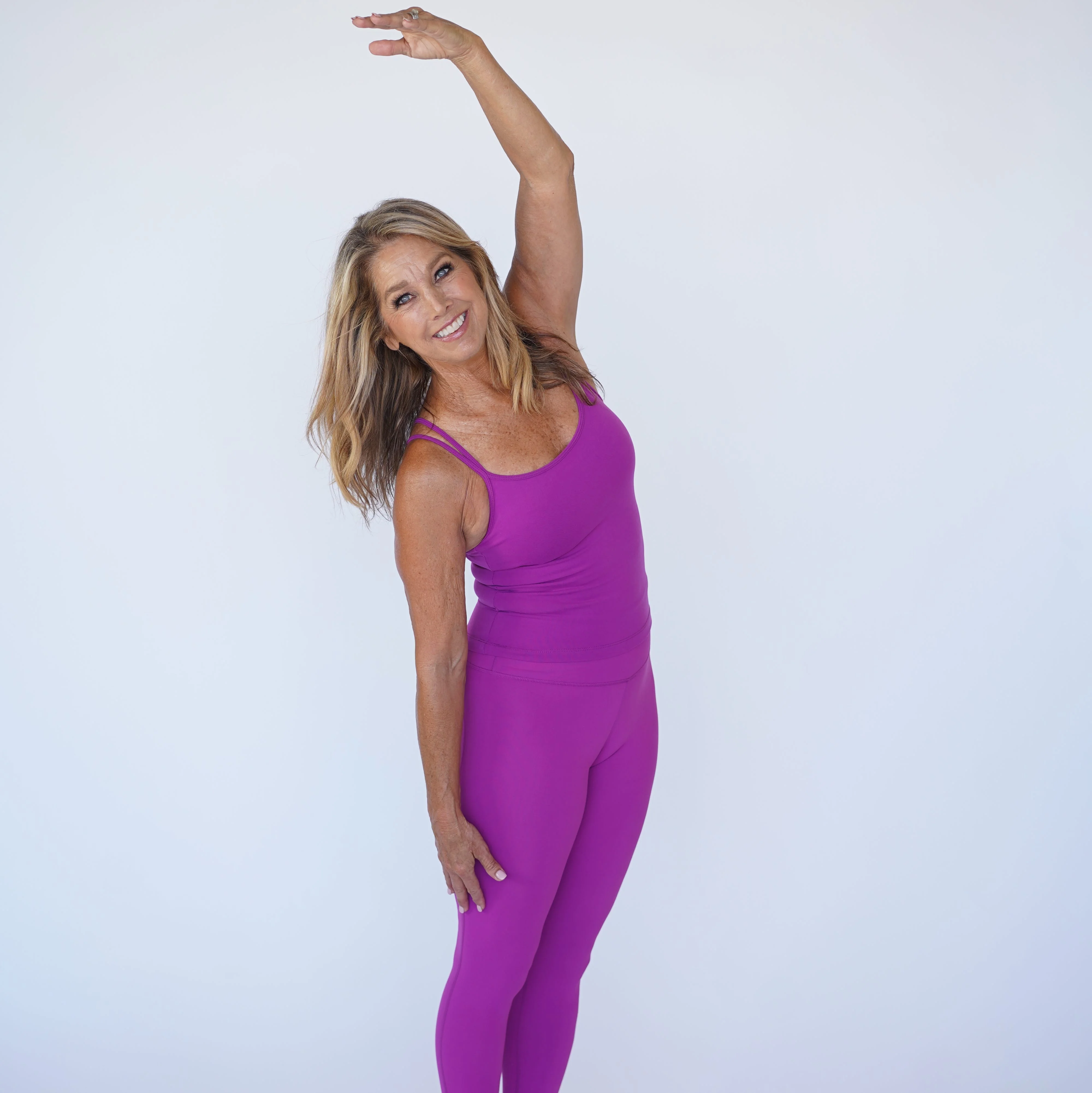
This lateral reach stretches the torso and muscles around the shoulder while encouraging an upright posture. It can be a simple counter to the rounded position many people adopt while looking at a phone or settling into a seat. Keep both feet grounded and lean only as far as you can without twisting or losing your balance.
- Stand or sit tall.
- Reach your right arm overhead and lean gently to the left, reaching up and over.
- Hold for at least 30 seconds, then change sides.
Standing Hip Flexor Stretch
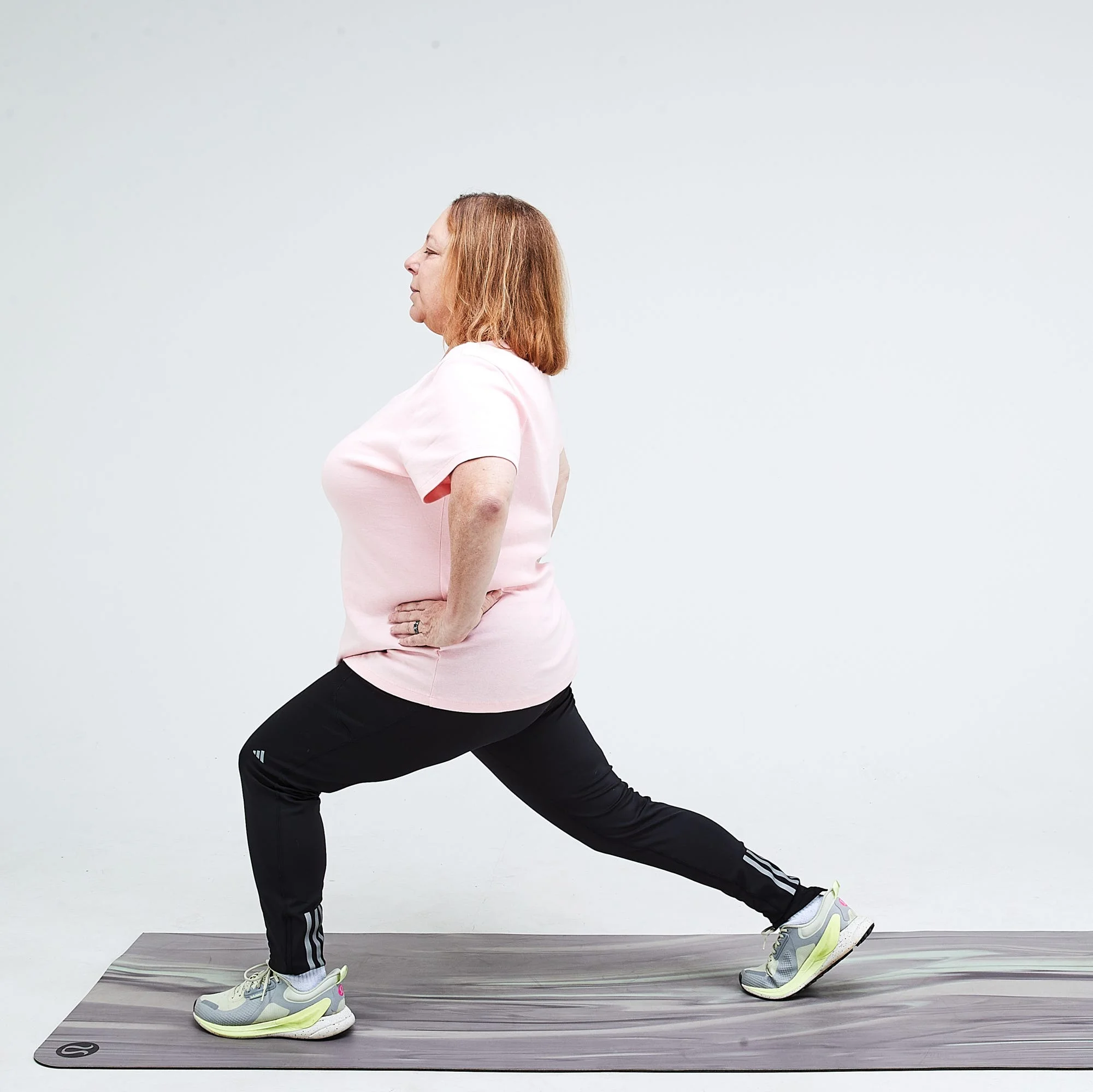
Hip flexors at the front of the hips may tighten when sitting dominates the day. This short lunge position lengthens them, but a larger step or deeper bend won’t necessarily make the stretch more useful. A small shift forward, paired with a gentle pelvic tuck, is often enough to notice the front of the back leg opening.
- Stand with feet hip-width apart and step your right foot back.
- Bend your left knee to roughly 90 degrees, keeping the right knee slightly bent.
- Tuck your pelvis gently and shift your weight forward until you feel a stretch at the front of the right hip.
- Hold for at least 30 seconds, then switch sides.
Calf Stretch
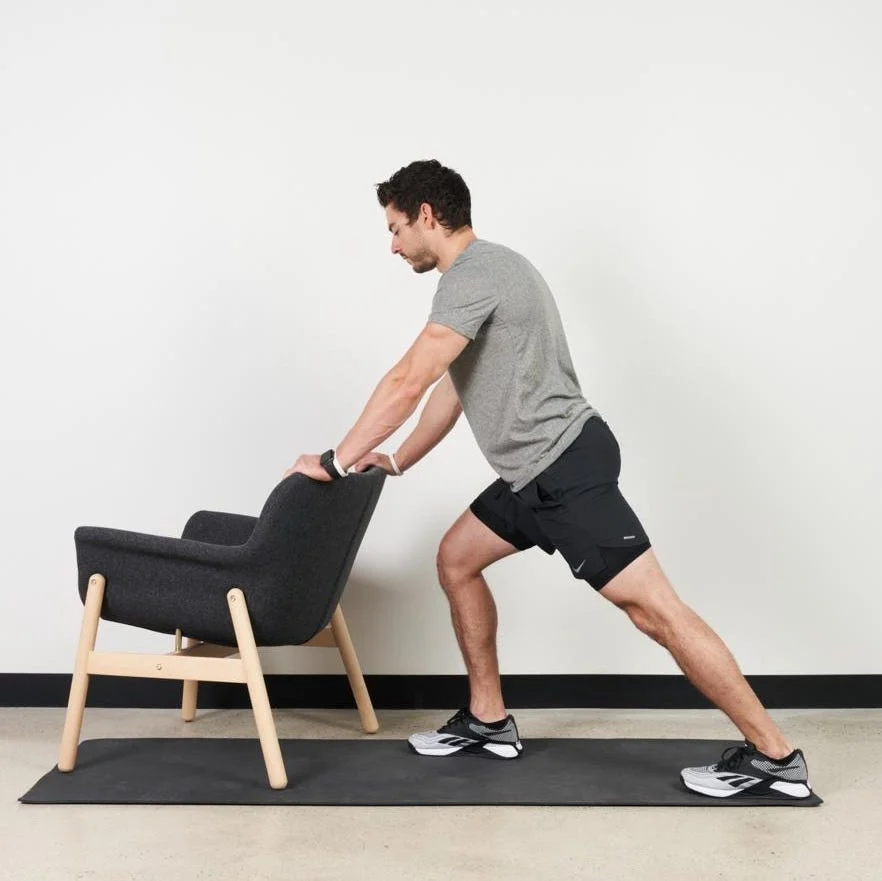
Walking and sitting can both leave calves and ankles feeling tired. Use a stable surface for balance as you stretch, and keep the heel close to the floor rather than bouncing in and out of the position. The stretch should feel steady; if it doesn’t, adjust your stance before leaning farther forward.
- Face a wall or other steady support and place both hands on it.
- Step your left leg back, pressing the heel toward the floor. Bend your right knee and lean slightly forward until you feel the stretch in your left calf.
- Hold for at least 30 seconds, then repeat on the other side.
Standing Chest Opener
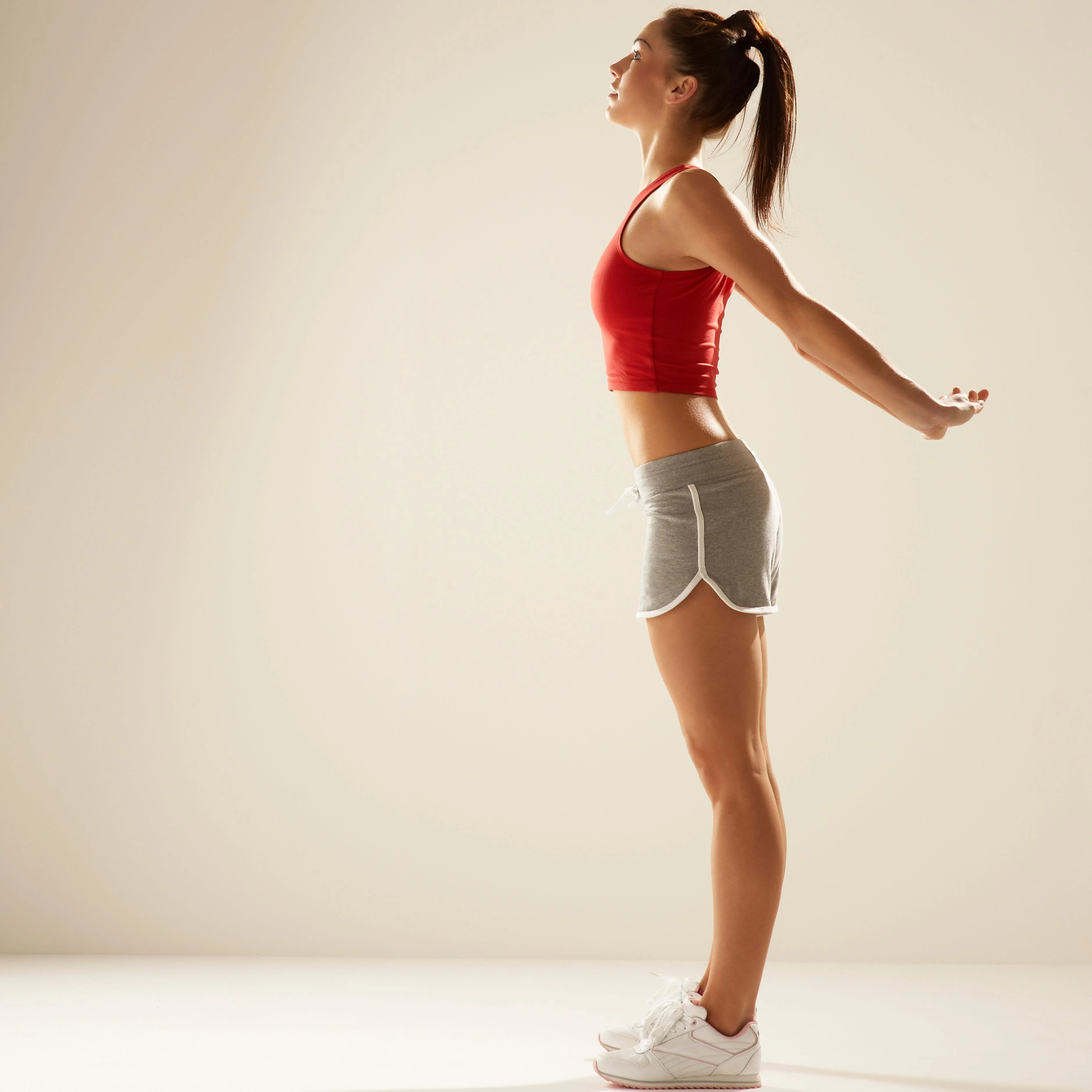
Phones and cramped seats can draw the shoulders forward. This position opens the chest and stretches the muscles across the chest and back, giving the upper body a brief change from its usual travel posture. Keep the movement gentle: pulling the arms hard behind you can turn a simple stretch into an uncomfortable one.
- Stand with feet hip-width apart and clasp your hands behind you.
- Draw your shoulders gently back and down, then lift your chest until you feel a stretch.
- Hold for at least 30 seconds. Keep your back neutral and avoid pulling your arms to force the position.
Make the break count
These movements can fit into a brief stop or a quiet moment before boarding. You don’t need to complete every stretch at once; a short pause to move the areas that feel most restricted can make the break easier to fit into a trip. And this is the part most people overlook: a stretch is a moment of movement, not a substitute for changing position when you can.
This is more significant than it looks. Travel often asks the body to alternate between long periods of stillness and bursts of walking, and a few deliberate movements can make that transition feel less abrupt. If you’re working in this space, the useful message is modest: keep the advice practical, make comfort the guide, and don’t promise that stretching will erase the effects of a long journey.
A little regular motion gives stiff joints and muscles a chance to reset, helping you arrive more ready to enjoy the trip. The payoff may be small. Still, a brief, comfortable break is a sensible way to make travel feel less static.


Discussion
Sign in to join the discussion.