Rising premiums, deductibles, and medical bills are forcing people across the U.S. to delay care, ration medication, and take on debt.

The clearest measure of America’s healthcare cost crisis isn’t a national spending chart. It’s what people give up to stay covered—or what happens when they can’t.
Bill McAdams, a 45-year-old travel nurse in Holiday, Florida, had no insurance when he suffered a stroke last year. His agency’s plan would have cost $3,600 a month for him and his wife, beyond what he could afford. The hospital bill came to $93,000.
Janet Marx, 56, of Milford, Connecticut, has coverage through her husband’s employer and Medicare. She also has lupus and fibromyalgia, conditions that leave her disabled. Even with two sources of insurance, she and her husband sold the house where she grew up to manage their medical expenses.
Sheila Robinson, 61, lives in District Heights, Maryland, and faces a $10,000 deductible on her Affordable Care Act plan. She looks for lower self-pay prices when she visits a doctor. Her $659 monthly premium goes on a credit card; she knows carrying the balance means paying interest.
“I am just afraid to even go to the doctor,” Robinson said. She has arthritis, a pinched nerve in her neck, and high blood pressure. “Every month, I am in the hole.”
This year, KFF Health News has chronicled how healthcare bills are reshaping people’s lives. Reporters heard from more than 130 people around the country trying to cover premiums, copayments, prescriptions, and medical bills as housing, energy, and food costs also rise. Some are dropping insurance. Others are rationing medication, skipping appointments, or delaying procedures.
That spread is the point. “We’re not talking about the uninsured or those who are low-income who are struggling now,” said Rebecca Kirch, executive vice president at the National Patient Advocate Foundation. “Now it’s become an all-of-us issue.”
Costs are rising across the system
Healthcare spending has generally outpaced the broader economy for decades. The recent pace has been especially sharp: In 2023 and 2024, spending grew faster than at any point in two decades, apart from the Covid-related surge in 2020.
Both the price of care and the amount of care people receive have increased. Hospitals, doctors, and other clinicians charge more, while patients are also using more services. Federal figures put U.S. health spending at nearly $5.3 trillion in 2024, compared with $3 trillion a decade earlier, according to federal data.
Spending is projected to keep growing faster than the overall economy. By 2032, healthcare could account for 20% of U.S. gross domestic product, compared with just under 19% today. That trajectory matters to patients because higher system-wide costs show up in premiums, deductibles, and bills they must pay themselves.

People with modest and middle incomes, especially those managing health conditions, are bearing much of that pressure. They’re paying more for coverage and more when they actually need care.
Congress, led by Republicans, chose not to extend the pandemic-era subsidies for Affordable Care Act plans. It also cut billions from other federal health programs to help pay for tax cuts for wealthy Americans and increased immigration enforcement. Supporters of the cuts argued that public insurance programs are riddled with fraud and waste.
President Donald Trump sent $500 rebate checks to fewer than 5% of higher-income ACA marketplace enrollees. At the same time, his administration has been expanding access to plans with lower premiums and higher deductibles, shifting more of the bill to patients who need care. Employers are passing rising costs on to workers, and clinicians are asking patients to pay up front.
There is one notable exception: prescription drug prices fell by more this year than in any year in decades. Both the Biden and Trump administrations took steps to lower drug prices in response to pressure from consumers.
That relief hasn’t quieted wider frustration. In a KFF poll conducted in mid-September, ahead of the November congressional midterms, healthcare costs remained one of the public’s leading affordability concerns. Nine in 10 Democratic respondents and three-quarters of Republican respondents said the U.S. healthcare system needs a complete overhaul or major changes. KFF is a health information nonprofit that includes KFF Health News.
She Sold Her Childhood Home To Afford Healthcare
Janet Marx, 56
Milford, Connecticut
Janet Marx has Medicare and coverage through her husband’s employer. She receives Social Security disability income because of fibromyalgia and lupus, a disabling autoimmune disease. Even so, paying for care remains difficult for her and her husband.
Marx spoke about the problem at an online event hosted by the National Patient Advocate Foundation. A run of $80 copayments for in-home physical therapy helped bring the problem into focus, she said. The couple sold her childhood home and moved into an apartment.
“Things are just getting too expensive to afford the house and health problems,” she said.
— Renuka Rayasam and Sam Whitehead
His Premiums Went Up. Now He’s Cutting Back To Make Ends Meet.
Damien Waikoloa, 35
Honolulu, Hawai‘i
Damien Waikoloa chose to keep his ACA insurance so he could manage several chronic conditions, despite his monthly premium climbing from about $240 last year to more than $400. The increase has forced the Honolulu small-business owner to pare back elsewhere. He is looking for ways to reduce business expenses, including possibly taking a smaller salary, and is spending less on restaurants and trips to see friends and relatives in Seattle and California.
“Things like saving for a down payment for a house or even starting a family have completely gone out the window,” he said.
— Renuka Rayasam
What drives the bill
‘Profit Margins Everywhere’
A typical American family spends about $5,600 a year—roughly 9% of its income—on premiums, out-of-pocket care, and taxes that support health programs, according to the Peterson-KFF Health System Tracker. Across the country, annual health spending works out to more than $15,400 per person.
The basic explanation for high U.S. healthcare costs is that prices are high. Clinicians, hospitals, drugmakers, and other parts of the system charge more. Knee replacements show the difference: U.S. doctors perform about a third as many inpatient procedures as doctors in other wealthy countries, yet the price per operation is higher than in most of those nations, according to the Peterson-KFF tracker.
Researchers point to several recent forces behind price growth. Hospital systems are merging, then drawing on their greater market power to raise prices. New treatments and technologies—including GLP-1 drugs for diabetes and weight loss—carry high price tags. Inflation and tariffs imposed by the Trump administration add costs for supplies ranging from latex gloves to medical devices. And when more people are uninsured, fewer people remain to share the costs.
“It’s really everything all together at once,” said Christopher Whaley, a health policy researcher at Brown University.
The deeper explanation is how the U.S. system sets and pays for care. Clinician fees and administrative expenses run higher than in other countries. The U.S. does not set all prices centrally, ration care, or control prices based on quality.
In most local markets, insurers negotiate rates with hospitals, clinicians, and drugmakers. Providers then bill for each test, treatment, or medicine, whether or not it improves the result. A 2022 research brief in Health Affairs found that more than half of healthcare payments were still tied to fee-for-service. Under that arrangement, hospitals and doctors earn more when they bill for more.
The system’s tangle of billing rules, rates, insurers, and networks adds another layer of expense. Sending bills and handling paperwork can cost hundreds of billions of dollars. Insurers try to restrain spending, in part by restricting what they reimburse, but they also retain a share of the money.
“There’s profit margins everywhere, and there are varying degrees of financial incentives throughout the healthcare system,” Whaley said.
Those financial incentives don’t necessarily reward better health. Steven Ullmann, director of the Center for Health Management and Policy at the University of Miami Business School and a professor there, said the system favors expensive treatment over cheaper preventive care. It can keep patients returning to clinicians in their insurance networks without ensuring those clinicians deliver better outcomes.
Higher prices also don’t guarantee better care. Ullmann cited prenatal ultrasounds in Orlando: prices vary widely for the same service, with no clear difference in quality.
“Same city, same procedure,” Ullmann said. “That is a reflection of a broken system.”
For patients, the consequences can go well beyond a large bill. High prices can make people postpone care they need.
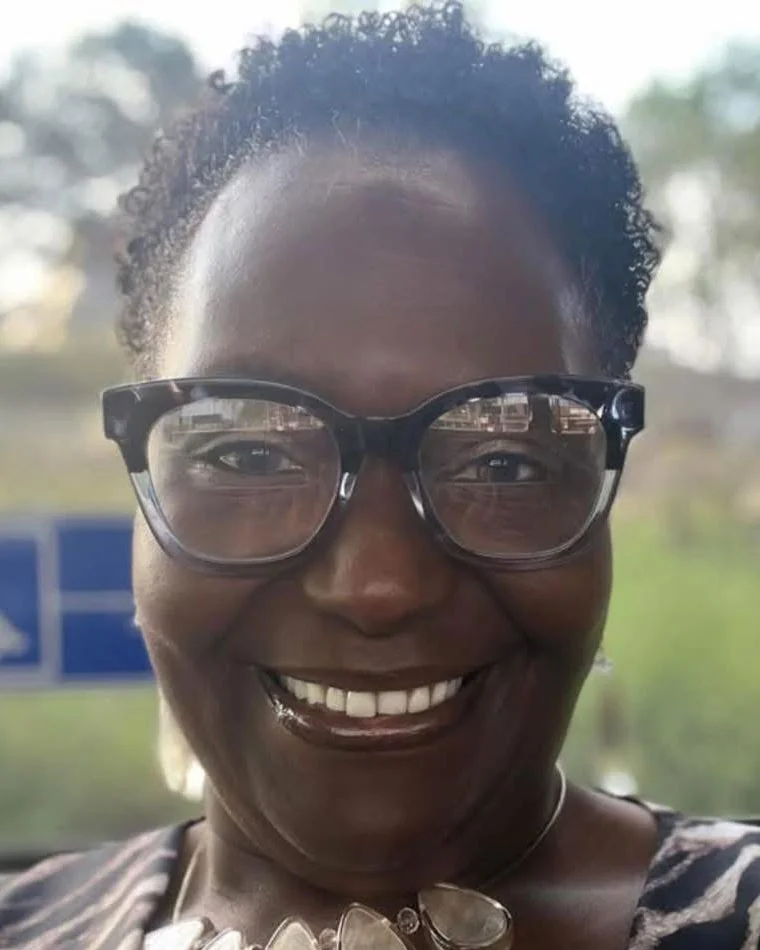
In 2025, a health system garnished the wages of Carmilla Collins, 52, of Omaha, Nebraska. The single mother said she had accepted the tests and medications doctors ordered after diagnosing her thyroid disease, along with routine preventive care such as a colonoscopy. She did not realize the financial consequences until medical debt piled up.
Collins had accrued bills both while insured and while uninsured. The hospital hired a collection agency, which sued her; a court then allowed it to take hundreds of dollars from her paycheck. She remembers being “spitting mad.” Rent was nearly out of reach.
“I’m working two jobs,” she said. “And I’m going to be homeless because of this noose that’s around my neck.”
Collins later qualified for hospital financial assistance. But she said she delayed thyroid surgery for four months as a goiter grew against her throat and made eating difficult. She had employer coverage then, yet feared the deductible and other charges. Eventually, her health worsened enough that she could no longer wait.
“I equated taking care of my health with debt that I couldn’t afford,” she said.
Why costs are hard to bring down
No Quick Fixes
Policymakers have spent years trying to find ways to slow medical prices and overall U.S. health spending. The politics are difficult because a lower bill for patients means less income for someone else in the system: doctors, hospitals, drug companies, insurers, or another provider.
“For the most part, health spending for us is income to someone else,” said Zack Cooper, a health economist at Yale University.
Other countries have cut costs by simplifying administration or capping prices. Those options face long odds in Washington. Since 1998, health industry interests have spent more than $14 billion lobbying Congress, across both parties, according to OpenSecrets, a nonprofit that tracks political spending in the U.S.

Lynn Ludaway, 40, said she considered divorcing her husband after her multiple sclerosis diagnosis three years ago, hoping she might qualify for help with medical costs. They wanted to stay together.
She first had insurance through her husband’s job, but still faced large bills. Her expenses also included the practical costs of living with a disabling condition, such as Uber rides and a cane as her mobility declined. The medical bills reached tens of thousands of dollars.
“I thought I was well prepared for an emergency,” said Ludaway, who gave up her consulting business and used savings and retirement funds to pay for tests and treatment. “Nobody can prepare for this.”
She now pays $500 a month for coverage through Illinois’ ACA marketplace. Her husband’s job pushes their household income too high for state or federal assistance.
“I am in this weird in-between,” she said. “I need to rest to heal, but I need to work to live.”
Ludaway turns to private aid from foundations and the hospital system where she receives care. She skips services she cannot afford, including dental and mental healthcare, and says she has to watch her spending more closely than she did in college.
“Broke undergrad has nothing on chronic illness,” she said.
This Therapist Accepts Health Insurance. But Affording It for Herself Is Hard.
Shayna Sanders, 45
New Haven, Connecticut
When the bill becomes part of the illness
Health coverage can keep a medical bill from becoming catastrophic. It can also leave patients paying so much that they delay care, stop treatment, or lose faith in the system. That tension runs through the stories here—and through the policy fight over who should carry the cost.
Shayna Sanders, a marriage and family therapist, has bought insurance through her state’s Obamacare marketplace for more than a decade. Her monthly premiums have climbed to nearly $1,000. Insurance companies help her earn a living by covering her patients’ appointments, she said, but the plans themselves are increasingly beyond her reach. “Some of the health insurance plans that they have, I probably couldn’t afford them myself due to the cost.”
— Sam Whitehead
The bill changes hands
Much of the federal debate over health care comes down to who pays. Republicans have emphasized tax and spending cuts, arguing that they will address what they claim is pervasive fraud in government health programs. Those cuts shift more expense to patients than taxpayers and are expected to increase the number of uninsured people. Democrats, meanwhile, fought last year to extend enhanced marketplace subsidies, which would shield patients from some premium increases by putting more of the cost on taxpayers.
Some progressive Democrats, including candidates winning primaries in battleground states, are again calling for “Medicare for All.” A single public insurer could eliminate out-of-pocket costs and relieve patients such as Ludaway. But that wouldn’t necessarily reduce total health spending: Clinicians, hospitals, drugmakers, and other groups could still press for high prices, leaving taxpayers to pay the bill.
Even ideas with support across party lines have produced limited results. Requiring hospitals and doctors to publicly post medical prices, for example, has done little to bring costs down.
Policy discussions about access and quality should also address the total amount the country spends on health care, said Michael Chernew, a professor of healthcare policy at Harvard Medical School. “We don’t have some rich uncle that’s coming and just paying for all of our care. One way or another, collectively we are paying,” he said. “It’s just we’re shifting who is paying, how much we’re paying, and through which mechanisms we pay.”
The scale of that spending hasn’t prevented people from going without care. About 27 million people—nearly 10% of the U.S. population under 65—had no health insurance in 2024, according to KFF. The nonpartisan Congressional Budget Office projects that the number will rise by 10 million or more by 2034 because of policy and funding changes.

Melody Stephens, 55, works as a geriatric nurse at an assisted living facility in Berryville, Arkansas. She dropped her ACA marketplace plan this year when the monthly premium for her and her younger daughter jumped from a little over $200 to more than $2,000. Her employer plan would have cost $1,000 a month—also beyond her budget. “There was just no way I could do that,” she said. “That was just not feasible.”
Stephens enrolled in an ACA plan after an anal cancer diagnosis about a decade ago. Coverage paid for much of her cancer care, but not the substantial bills for radiation side effects. She filed for bankruptcy two years ago.
Now she and her college-age daughter are relying on financial assistance and cutting back on care. Hospitals wrote off bills for some of her daughter’s surgeries, Stephens said, but they still owe money for tests and treatments. Stephens stopped taking a GLP-1 medication for diabetes and a nerve-pain medication because of the cost. She said she can’t afford a colostomy and lives with incontinence. Her message to lawmakers in Washington: “They just seem to fight.”
Pressure is building
Insurers expect ACA marketplace premiums to rise 15% next year, marking a second consecutive year of double-digit increases. Employer health costs are projected to increase 9.5%, a rise likely to put more pressure on workers.
Researchers and economists who study health spending doubt that federal lawmakers are ready to confront its overall growth, even with midterm elections approaching. But the strain is spreading across the economy, hitting employers and state governments as well as households. Michael Cannon, a health policy analyst at the libertarian Cato Institute, said the current course cannot last indefinitely: “We cannot stay on this path forever.”
That pressure is producing some unlikely policy moves. Last year, the GOP-led Indiana legislature capped what some nonprofit hospitals can charge patients with employer-sponsored insurance. Beginning in 2029, five of the state’s largest nonprofit hospitals could lose their tax-exempt status if they exceed those limits. This year, Texas Republican Gov. Greg Abbott proposed caps on certain drug prices. Hospital price limits and drug price controls have more often been associated with left-leaning politicians; Trump has also proposed lowering prescription drug prices.
Those proposals may signal that cost pressure is changing the politics. They don’t yet show whether lawmakers will tackle the total price of care or keep shifting the bill among patients, employers, states, and taxpayers.
When medical debt changes a life
For Bill McAdams, a nurse in Holiday, Florida, medical debt became a source of intense stress. He believes the strain of disputing a hospital bill contributed to a second stroke.
After his first stroke in September 2025, McAdams bought insurance, but it didn’t cover preexisting conditions. In March, when his vision and balance began to fail, he went to urgent care instead of the emergency room because he feared another large bill. Later that month, after a distressing conversation with the hospital about the first stroke’s bill, he said his symptoms returned. He ended up in the ER with a second stroke.
“I was so afraid of dealing with the billing issues again that I did not want to go to the emergency room,” he said. He later put it this way: “Due to all the stress, it delayed me in seeking care. I didn’t want to deal with the stress of more hospital bills.”
McAdams is now applying for Social Security Disability Insurance because he can no longer work as a nurse. The health system reduced his total bill to $50,436, but he still can’t afford it without a steady salary. He and his wife are expecting a baby this fall. He once took pride in working in a health system that had saved his life and many others. The financial strain has changed that. His trust in the system, he said, is gone.
He Said Medical Debt Caused His Second Stroke
Bill McAdams, 45
Holiday, Florida
In March, Bill McAdams began having trouble with his vision and balance. He chose urgent care over the emergency room because he feared adding another bill to the debt from a stroke he had while uninsured months earlier. Later that month, after becoming upset while discussing that bill with the hospital, he said his symptoms returned and he was taken to the ER with a second stroke. He now owes even more.
“Due to all the stress, it delayed me in seeking care,” he said. “I didn’t want to deal with the stress of more hospital bills.”
— Sam Whitehead and Renuka Rayasam
Are you struggling to afford your health insurance? Have you decided to go without coverage? Click here to contact KFF Health News and share your story.
KFF Health News is a national newsroom producing in-depth journalism about health issues and is one of the core operating programs at KFF, an independent source of health policy research, polling, and journalism. Learn more about KFF.
This article first appeared on KFF Health News and is republished under a Creative Commons Attribution-NonCommercial-NoDerivatives 4.0 International License.



Discussion
Sign in to join the discussion.