Creatine Is Apparently Good for Everyone Now. The ...
New meta-analyses show this tried and true supp can benefit both men and women—but you still have to...
Read articleIn a 12-week study of adults aged 45 to 65, creatine users gained lean tissue with or without supervised exercise, with larger gains alongside training.
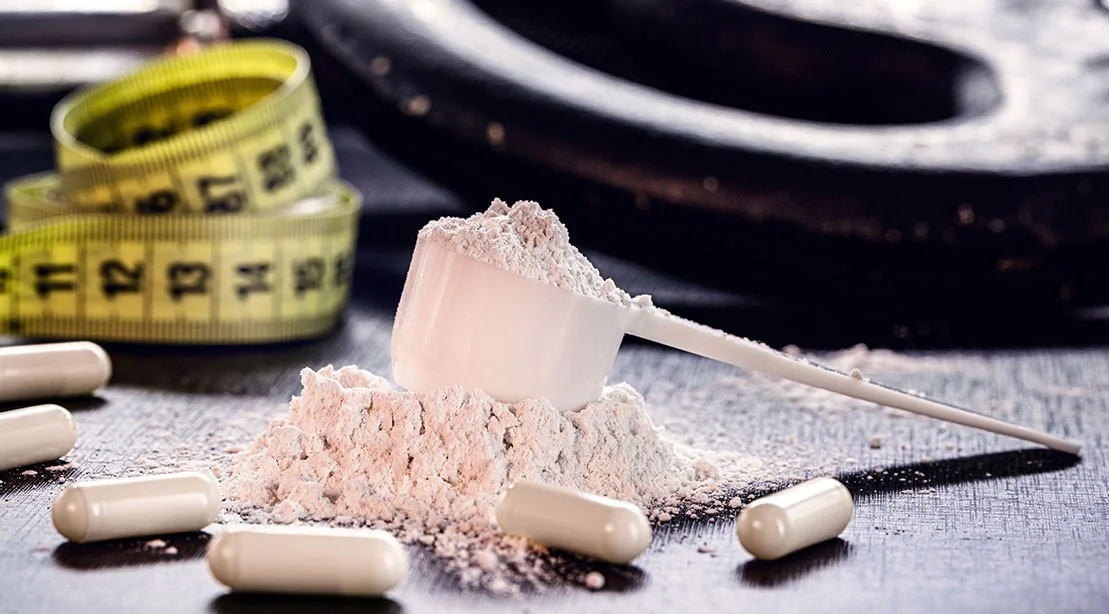
Creatine’s potential value for adults over 45 may extend beyond exercise performance. In a 12-week Texas A&M University study, participants who took creatine gained lean tissue even without joining a structured exercise program. That finding challenges the idea that supplementation’s relevance begins and ends in the gym, though it doesn’t show that creatine can replace exercise. Gains were greater when creatine was paired with supervised training, making the comparison between the groups as important as the headline result.
The distinction matters because “no structured exercise program” doesn’t necessarily mean no physical activity. Participants outside the program still reported their activity in questionnaires, and those in the supervised program accumulated more moderate-to-vigorous activity. The study therefore compares participation in an organized program with its absence; it doesn’t establish that the creatine group gained lean tissue while remaining completely inactive. That’s a more limited claim, but still a useful one for people who aren’t following a formal training plan.
The study, published in the Journal of the International Society of Sports Nutrition, assigned men and women aged 45 to 65 to creatine or a maltodextrin placebo. Participants were also grouped by whether they took part in a supervised exercise program. This design let researchers examine how supplementation and organized training related to the reported changes, while the placebo groups offered a point of comparison. The study lasted 12 weeks, so its results describe changes over that period rather than showing what happens over years.
Among people who didn’t join the structured program, those taking two 5-gram doses of creatine daily gained about 2.4 pounds of lean tissue over 12 weeks. The placebo group lost nearly half a pound. That gap is notable, but it shouldn’t be read as a guarantee that every person taking creatine will gain the same amount. Individual results can differ, and the reported group averages don’t tell readers how much variation there was between participants.
The researchers also reported gains in strength and muscular endurance, alongside favorable changes in selected blood lipids, HbA1c, and measures of cognition and memory. Those findings broaden the questions raised by the study, but the word “selected” matters: the results don’t establish that creatine improved every measure of health or cognition. Nor does a change in a marker, by itself, show that participants experienced a noticeable improvement in daily life. The study offers signals to examine, not a sweeping case for supplementation.
This is more significant than it looks for adults who find structured training difficult to maintain. A supplement that might support lean tissue without a formal program could be relevant to that group. Still, the study doesn’t show that taking creatine alone delivers the same benefits as regular resistance exercise.
Creatine users in the supervised exercise group gained an average of 2.8 pounds of lean mass. That group followed a modest calorie deficit, yet participants taking creatine added nearly three pounds of lean tissue while losing fat. People who exercised and took the placebo saw little change in lean mass. The comparison suggests that creatine may have helped participants preserve or build lean tissue during a period when they were also reducing calories.
Both creatine groups also recorded a larger reduction in body fat percentage than the groups relying on exercise or diet alone, according to the study. The results point to a possible role for creatine in maintaining muscle during fat loss, although the strongest lean-mass gains came with structured exercise. The calorie deficit adds useful context: changes in body composition can involve both fat and lean tissue, so looking at weight alone would miss part of what the researchers reported.
That said, the supervised group’s results shouldn’t be treated as proof that creatine and training will produce the same outcome for everyone. The study reports averages for its participants under its particular conditions. It doesn’t establish how the results would change with a different training plan, a different duration, or a different group of adults. The practical message is narrower: in this study, creatine use was associated with better lean-mass results, and pairing it with supervised exercise produced the larger gain.
Muscle loss, or sarcopenia, can begin around age 35. For the average person, lean mass may decline by 1 to 2 percent annually; people who don’t do regular resistance training could lose 4 to 6 pounds of muscle per decade. Those broad figures help explain why even modest changes in lean tissue draw attention. Muscle supports strength and physical function, and the ability to maintain it can matter as people get older.
That makes the study’s findings relevant to middle-aged and older adults looking to maintain strength and lean tissue. The participants were aged 45 to 65, so the results speak most directly to that age range. They don’t settle what supplementation does for people outside it, or how long any benefit might last. A 12-week study can identify short-term changes; it can’t answer every question about lasting effects.
The authors concluded that creatine monohydrate, with or without exercise and dietary intervention, “may help middle-aged and older adults maintain muscle mass and strength” while affecting selected health and cognitive markers. The clearest practical signal is that creatine may support muscle retention on its own, while pairing it with supervised exercise produced greater gains. The qualified wording in the authors’ conclusion fits the evidence: “may help” leaves room for uncertainty, and the reported results don’t turn a possible benefit into a universal promise.
If you’re working in this space, the distinction between an option and a substitute deserves attention. The study gives adults who aren’t in a structured program a reason to ask whether creatine could support lean tissue, while its larger gains in the training group point back to the value of supervised exercise. A supplement may be easier to adopt than a new routine, but the study doesn’t show that it can reproduce the full set of benefits associated with training.
And this is the part most people overlook: the reported outcome was lean tissue, not simply a number on the scale. Creatine’s connection to changes in lean mass makes it useful to read the study’s measurements carefully, especially when body fat and calorie intake are also part of the picture. The results are promising in scope, but their limits are plain. A short study in a defined age group can suggest where further research might focus; it can’t tell readers exactly what they’ll experience.
For now, the study adds evidence that creatine’s possible relevance for adults over 45 isn’t confined to athletic performance. It also gives a clear reason to keep exercise in the discussion: participants who combined creatine with supervised training recorded the strongest lean-mass gain. A useful signal. A measured conclusion.

New meta-analyses show this tried and true supp can benefit both men and women—but you still have to...
Read article
Morning eye puffiness is mostly fluid pooling in paper-thin skin. Sleep position, salt, allergies, and cold treatments all play a role.

Heart disease kills more women than any other condition. New joint guidance ties cardiovascular care to hormonal life stages to enable earlier risk detection.

Four weeks of walks and commutes showed the Asics Gel-Kayano 33 is plush and cushioned, but its toe box runs narrow. Size up if your feet skew wide.
Discussion
Sign in to join the discussion.