Expect significant premium increases of 14% for small group health insurance in 2027 due to rising medical costs and specialty drug prices.
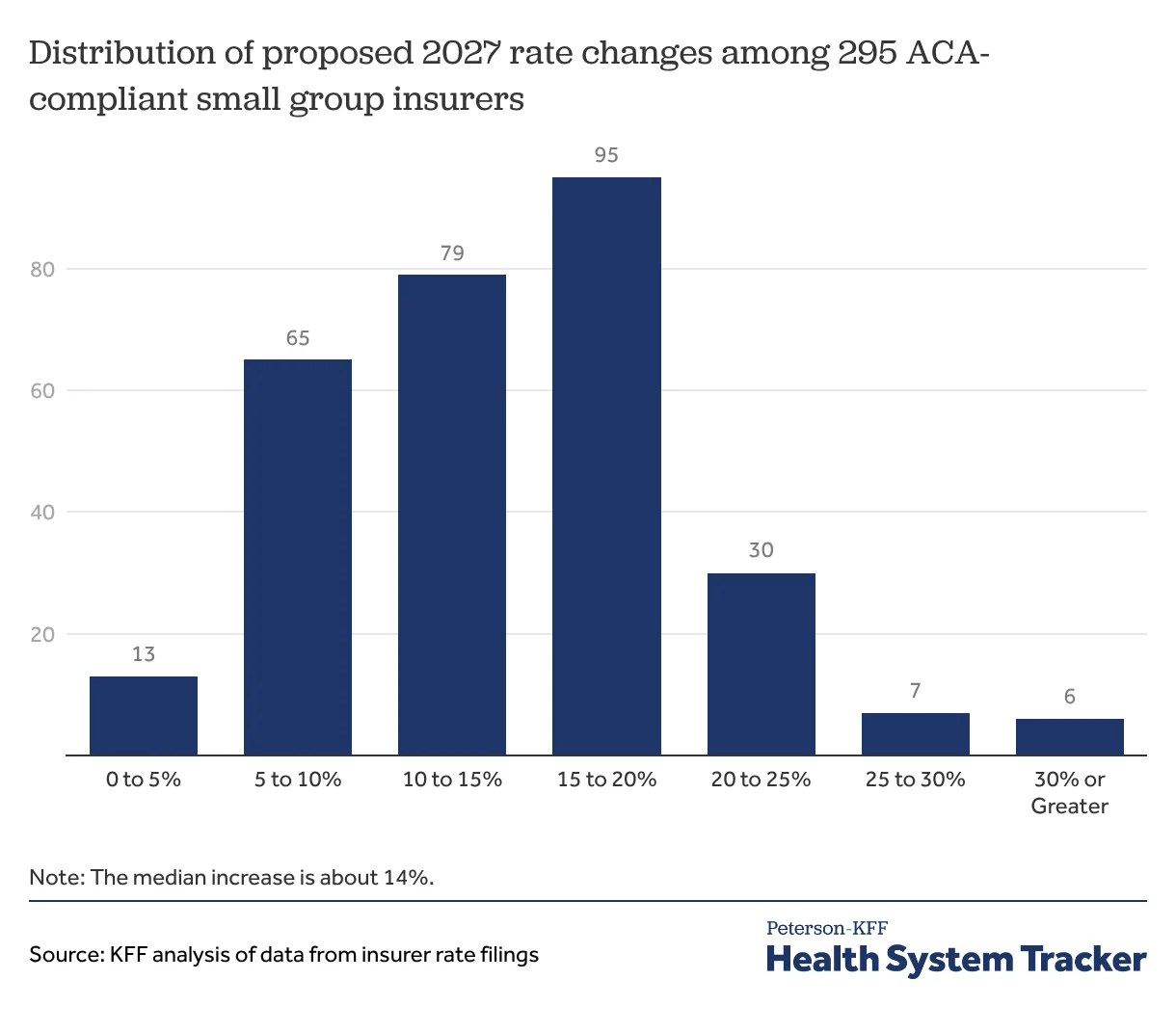
This upcoming year is pivotal for the small group health insurance market, where significant premium hikes are anticipated. Each year, insurers are required to submit detailed filings to state regulators, outlining their plans for rate changes in ACA-compliant offerings. This exercise isn’t merely bureaucratic; it reveals core insights into the financial health of the insurance landscape, particularly for small businesses.
The median proposed premium increase for 2027 is striking: 14% across 295 insurers in all 50 states, plus the District of Columbia. This rate surge is hardly isolated—nearly 60% of these insurers are hiking rates between 10% and 20%. Such numbers carry weight, particularly for small businesses already grappling with tight budgets. Many insurers attribute these increases to persistent trends such as rising medical costs, greater utilization of healthcare services, and the introduction of high-cost specialty drugs. More troubling, some insurers are addressing the strain of declining enrollment and the resulting deterioration of risk pools, with more businesses opting for level-funding arrangements that shift lower-risk employees away from fully insured plans.
### What’s Behind the Surge in Premiums?
To grasp the underlying causes of these proposed increases, it’s essential to delve into a narrower set of filings from 82 insurers in states that provide transparent documentation. Here, too, a 14% increase is the median, mirroring national trends. However, the details unveil a complex web of factors.
**Rising Healthcare Costs**
The relentless rise in healthcare costs remains a top-tier concern. For 2027, rates for underlying medical services—specifically hospital stays, doctor visits, and drugs—are forecasted to escalate by approximately 10.8%. This uptick is palpable for insurers, compelling them to raise premiums as they strive to cover ballooning expenditures. Insurers are candid about these challenges, with statements from companies like Premera Blue Cross articulating that increased claims and utilization are “the primary drivers of the rate increase.”
**Specialty Drugs Are Driving Costs High**
Another notable pressure point is the skyrocketing costs associated with specialty drugs. Insurers are increasingly acknowledging the burden brought by the influx of high-cost biologics without generic alternatives, which pushes their overall costs—and consequently premiums—higher.
**Behavioral Health Needs on the Rise**
The surge in demand for mental health services is not helping the situation either; insurers report that demand is driving costs upward. Behavioral health claims are on the rise, adding pressure to an already strained healthcare system.
### The Impact of Regulatory Changes
This year, the implementation of the No Surprises Act introduces unprecedented measures aimed at consumer protection. However, early indications suggest it may inadvertently elevate costs for insurers, which could translate into larger premiums for consumers. The act dictates that out-of-network services at in-network facilities should incur in-network cost-sharing, yet payment disputes have often fallen in favor of providers, leading to financial strain on insurers.
### Enrollment Trends Signal Trouble Ahead
Perhaps most concerning is the trend of declining enrollment in fully insured plans. Since 2013, participation has plummeted by about 41%, shedding light on shifting dynamics. Many small businesses appear to be gravitating toward self-insured or level-funded plans, a move that dilutes the risk pool and escalates costs for those still in the fully insured ecosystem. Insurers report that groups with healthier employees are exiting the fully insured market, leaving behind sicker, more expensive enrollees, thereby necessitating higher premiums.
If you're navigating the small group health insurance arena, these changes should be on your radar. The implications of these proposed rate hikes extend beyond basic premiums; they affect budgetary planning for small businesses and the overall viability of health insurance offerings in a market increasingly marked by volatility and complexity.

Discussion
Sign in to join the discussion.