Contrasting the overall job market stagnation, healthcare employment has surged, driven by demographic changes and demand for services.
Healthcare Job Growth Outpaces General Employment
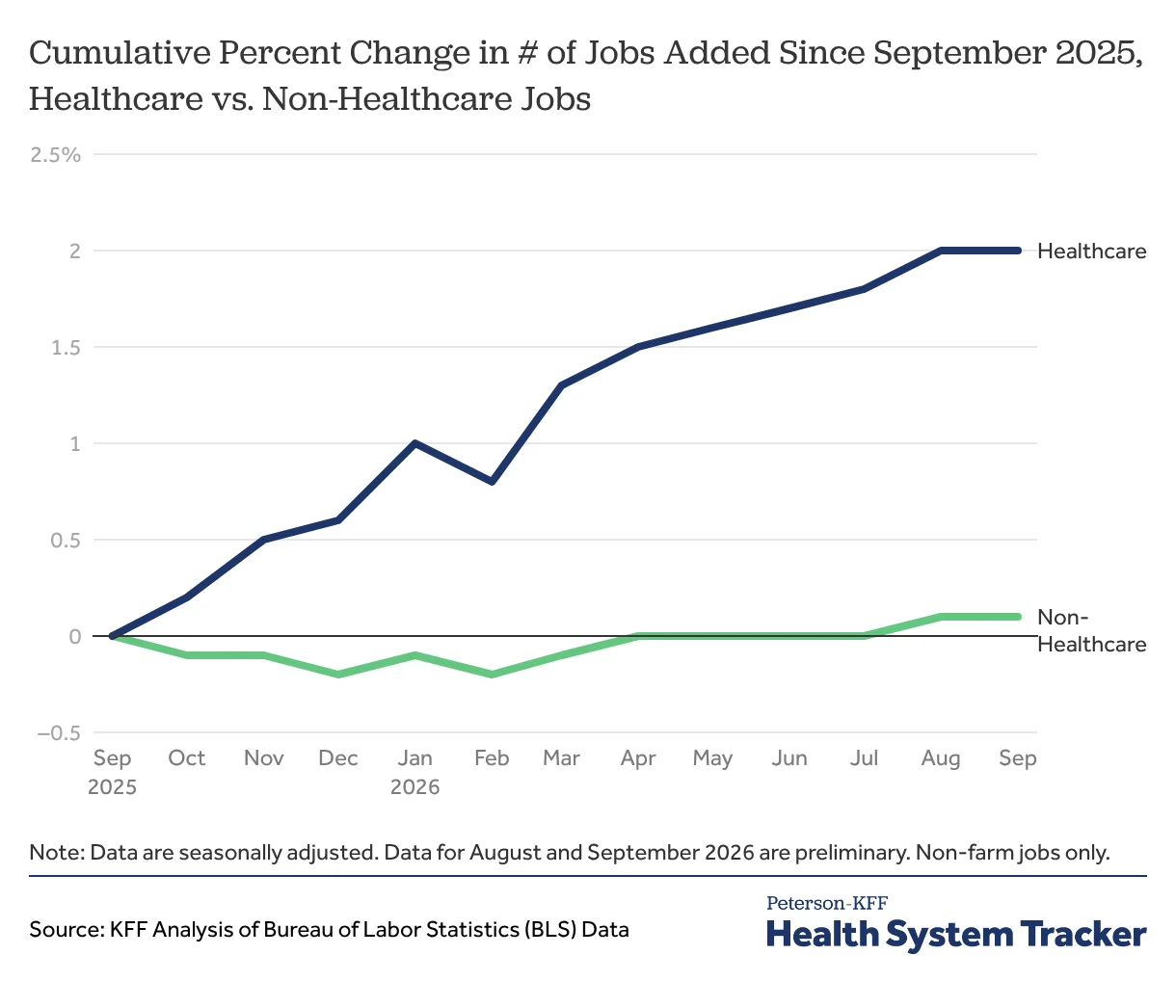
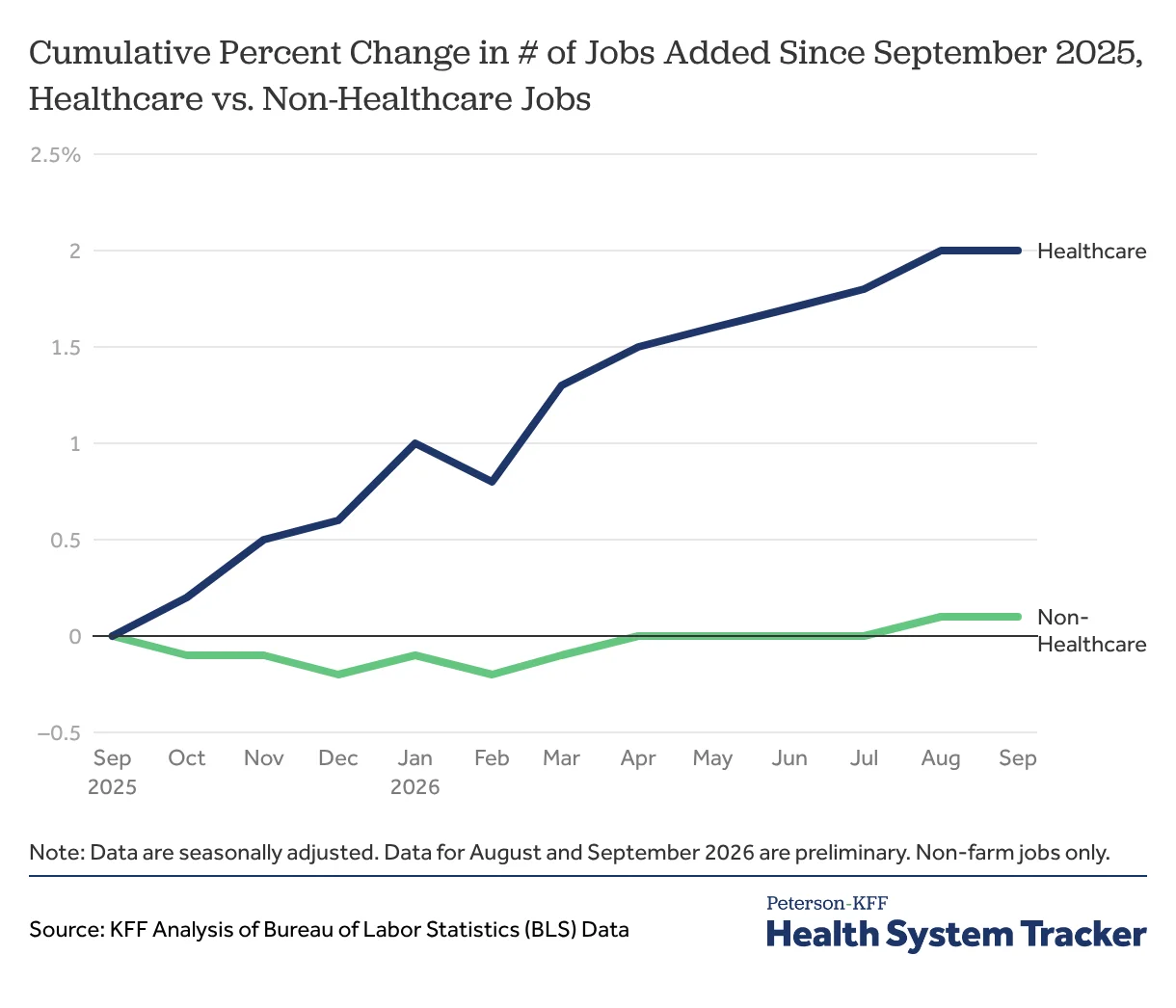
The latest jobs report from the Bureau of Labor Statistics reveals a stagnation in total non-farm payroll employment, with little change from August to September this year. Yet, one notable exception stands out: healthcare employment is steadily increasing, albeit at a slower rate than the previous year's average gains. This pattern has become a significant highlight as overall employment figures in various industries show less dynamism.
Since September 2025, the healthcare sector has successfully added 372,000 jobs, a 2.0% rise, while the broader economy, excluding healthcare, has seen a meager gain of 124,000 jobs, equating to just 0.1%. This underscores how pivotal healthcare employment has become, especially when juxtaposed against the tepid growth in non-healthcare sectors.
Diverse Employment Trends in Different Sectors
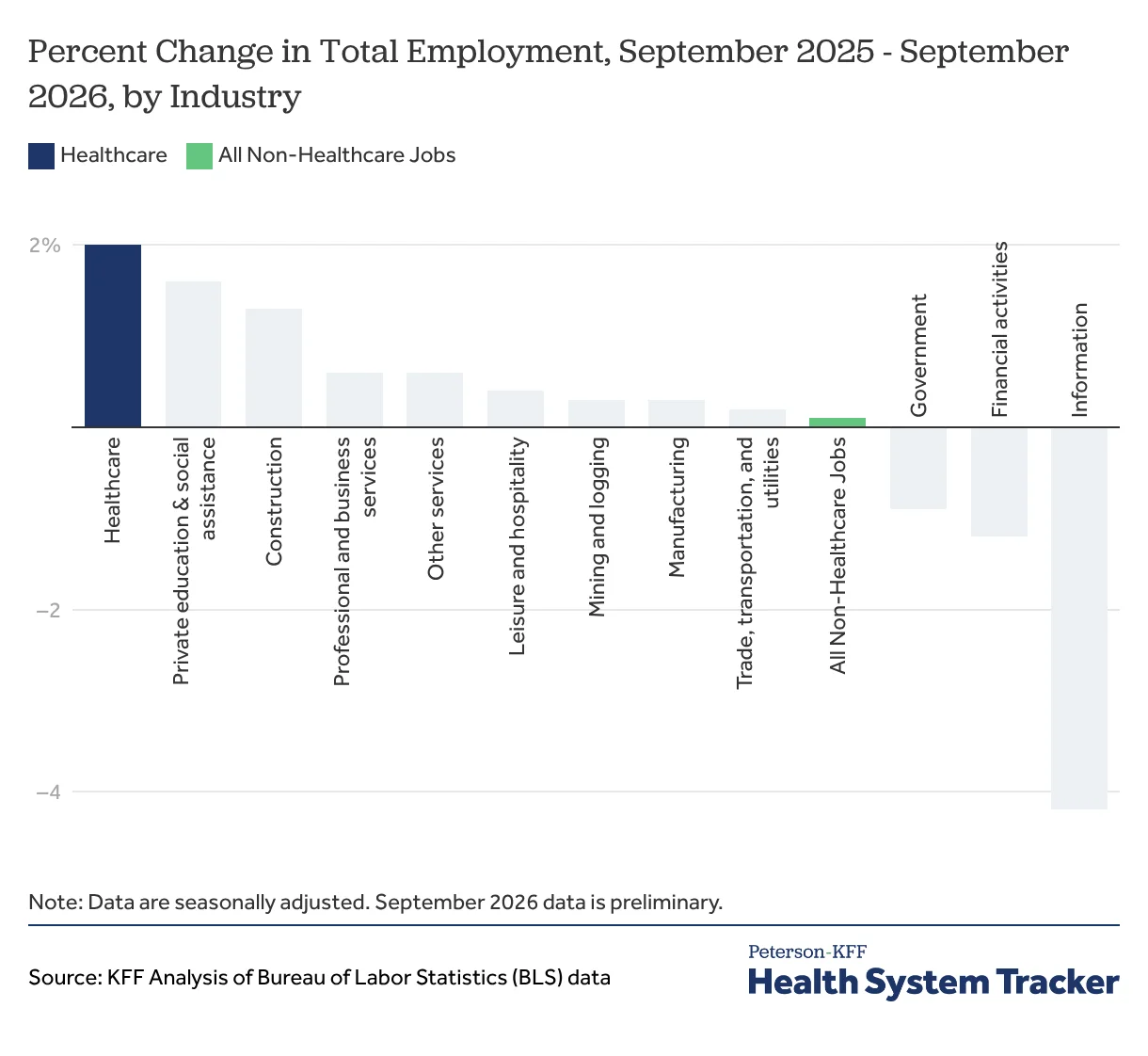
Total non-farm employment experienced a 0.3% increase over the past year, but when healthcare jobs are removed from the equation, this figure dips to only 0.1%. While healthcare shines as one of the fastest-growing sectors, other industries have also seen job growth. These include areas like social assistance, private education, construction, leisure and hospitality, and professional services. Notably, the slower growth in non-healthcare sectors can be attributed to declines in information services, financial, and government jobs.
In a larger context, healthcare has consistently outperformed other economic sectors in job growth over the last year.
Factors Behind Healthcare's Employment Surge
Several elements could explain why healthcare employment continues to surpass other sectors. The aging U.S. population and an increased prevalence of chronic conditions create a higher demand for healthcare services. In addition, many healthcare roles come with relatively high pay and require in-person interaction, making them less vulnerable to outsourcing or automation challenges. Since 2016, the healthcare sector has incrementally increased its share of total jobs and now encompasses a record 11.7% of all U.S. employment.
In the short term, the healthcare sector may remain insulated from larger economic disruptions due to the essential nature of the services provided. The demand for healthcare tends to be more inelastic, and third-party payments from insurance and government programs can mitigate the effects of rising costs on patient access.
Looking Ahead: Potential Shifts in Healthcare Employment
Despite its current success, future trends in healthcare employment may face volatility. The Bureau of Labor Statistics forecasts that jobs in private healthcare and social assistance will lead all sectors in growth through 2035. However, emerging factors such as advancements in AI and policy shifts complicate these long-term predictions.
Concerns about reduced revenue and patient demand loom large, too. The Congressional Budget Office anticipates an increase of over 10 million uninsured individuals by 2036 due to expected changes in the Affordable Care Act and Medicaid. This shift could lead to diminished demand for healthcare services and aggravated instances of uncompensated care. The impact of such developments on job stability in the healthcare sector, alongside the ongoing pressures prompting increased service utilization, will unfold over time.
The discussion here sheds light on the evolving healthcare employment dynamic, underscoring its significance as a critical sector in the U.S. economy.

Discussion
Sign in to join the discussion.