Kate Mihevc Edwards built RunSource to make coordinated running health guidance more accessible, with expert-reviewed content and AI tools that flag when care is needed.
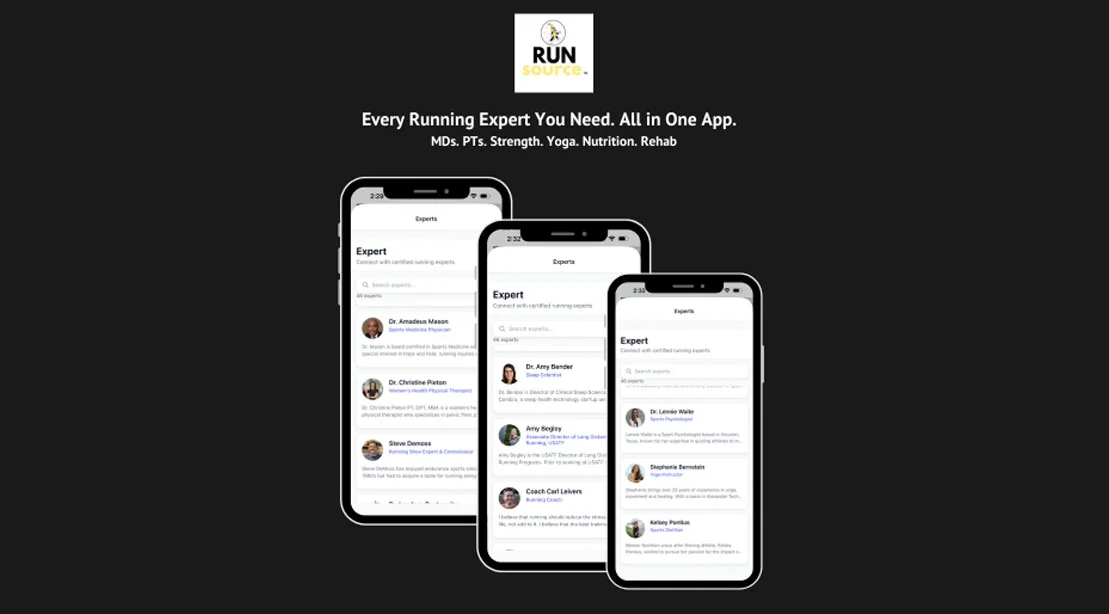
RunSource takes a model of coordinated care developed for elite runners and adapts it for people who can’t easily reach a team of specialists. The app, created by Atlanta physical therapist Kate Mihevc Edwards, combines expert-reviewed education with AI tools designed to help runners understand symptoms and decide when to seek in-person care.
Edwards has spent more than 16 years treating runners at Precision Performance and Physical Therapy. She says many arrive after consulting several providers without a clear explanation or a shared plan. The underlying problem, in her view, is often a lack of coordination across care.
“Runners kept finding that they weren’t getting the information they needed,” Edwards says. “They searched everywhere, asked so many people, went to so many providers. And the reason was fragmentation. Nobody was talking. Nobody was working together.”
A coordinated model, with limited reach
Six years ago, Edwards helped build an integrated medical team for Atlanta Track Club Elite. Physical therapists, a sports dietitian, a sports psychologist, a mental performance coach, a chiropractor and a physician meet weekly to review athletes’ health across disciplines. This season, the program recorded its first year without a bone stress injury. Edwards credits the coordinated approach.
For recreational runners, access to that kind of team is difficult. Specialists may be out of network, multiple appointments add up quickly, and runners outside major cities can struggle to find clinicians with running expertise. Time, cost and location all shape what care is practical.
Edwards says the uncertainty can take a psychological toll as well as a physical one. Runners who have seen several providers without getting answers may doubt their symptoms, stop running out of fear, or keep training and worsen an injury. Some experience depression or anxiety during the process.
Her perspective is personal. A cardiac diagnosis once forced Edwards off the road and sent her through repeated tests and specialist visits without a clear explanation. The experience of navigating fragmented care informed the problem she set out to address with RunSource.
Expert-reviewed content and two AI guides
Launched in June 2026, RunSource draws on contributions from more than 40 vetted professionals in physical therapy, sports medicine, registered dietetics, certified strength coaching and sports psychology. Edwards says each contribution passes through an “expert filter” modeled on the clinical standards used at her practice.
The app includes two AI agents. Katherine guides users through an educational symptom checker based on protocols Edwards uses in her clinic. Andrew answers general running questions using a curated library of peer-reviewed research and expert-produced material. The tools are designed to acknowledge when they lack an answer; when Katherine detects signs that could indicate a bone stress injury, it directs the user to a physician.
RunSource’s resources include injury education, physical therapist-designed programs for common running injuries, strength plans to support a return to running, and guidance on nutrition, training load and recovery. Users can also view contributor profiles and contact information.
“Much of what we do as clinicians is educate,” Edwards says. “Ninety percent of an appointment is the education and what you need to do to help yourself. That piece is what I built the app around.”
Keeping movement in the recovery plan
Edwards’ approach doesn’t default to taking runners off the road. She sees exceptions, including confirmed bone stress injuries, but argues that many conditions call for adjusted training and targeted treatment instead of complete rest. A tendon injury, for example, may require appropriate loading, reduced training volume and eccentric exercises.
That distinction reflects the app’s intended role: it offers education and direction while helping users recognize when a clinician should step in. As Edwards puts it, “RunSource does not replace a provider when you need one. It tells you when you need one, what kind to find, and gives you expert guidance in the meantime.”
RunSource costs $14.99 per month and includes a two-week free trial. It’s available on iOS and Android, and is HSA and FSA eligible through TruMed. Details are at katemihevcedwards.com/runsource.



Discussion
Sign in to join the discussion.