From engaging puzzles to cozy weighted blankets, caregivers share the gifts their patients and loved ones appreciated most. We may earn commission from links on this page, but we only recommend produc...
From engaging puzzles to cozy weighted blankets, caregivers share the gifts their patients and loved ones appreciated most.
We may earn commission from links on this page, but we only recommend products we back. Why Trust Us?
Choosing the perfect gift for anyone can be tough, but it can be especially challenging if when your loved one has dementia. Their tastes and interests may have changed on their health journey, making it hard to know if a present that would have been just right in the past is still a good fit. So what makes for the best gifts for people with dementia?
According to experts, the most thoughtful gifts are ones that show you care—and provide regular comfort in their daily life. “When selecting a gift, it’s helpful to think about things that will bring familiarity, sensory engagement, and simplicity,” says Tina Sadarangani, Ph.D., R.N., a primary care nurse practitioner, founder of New York University’s CareMobi app, and assistant professor at New York University.
Gifts that evoke memories and reduce anxiety tend to be the best fit for those with dementia—and they should also respect your loved one’s dignity and focus on where they’re currently at, Sadarangani notes. Also remember to keep safety in mind: You should avoid any gifts with small parts or anything that could pose a choking hazard, especially in patients who are in advanced stages of dementia, advises Jessica Corona-Irwin, R.N., a certified dementia practitioner at Remo Health.
Ultimately, your loved one is an individual, even while dealing with dementia, and you know what they’ll like best. But these ideas below—which range from splurge-worthy wellness gifts to thoughtful gifts under $50—are a good place to start, according to dementia care providers and loved ones who have given them.
To choose the best gifts for people with dementia, we consulted with healthcare providers to see what people with the condition need and may find comforting, including Tina Sadarangani, Ph.D., R.N., a primary care nurse practitioner and assistant professor at New York University; Jessica Corona-Irwin, R.N., a certified dementia practitioner at Remo Health; and Tanner Gish, C.D.P., C.D.D.C.T., a certified dementia practitioner and director of operations at Loving Homecare Inc. Additionally, we connected with several loved ones of people with dementia to learn more about the gifts they’ve found helpful.
Dementia can cause people to feel “disoriented,” says Tanner Gish, a certified dementia practitioner and director of operations at Loving Homecare Inc. “A visual reminder of the date, day, and time can reduce confusion, which is particularly valuable during later stages of dementia,” he says.
This clock from American Lifetime has large, easy-to-read letters and numbers, and spells out whether it’s morning or evening, along with the day of the week, date, and year.
“A digital photo frame that plays a slideshow of images might also be great, especially if it’s programmable for specific times of day,” Sadarangani says. “Just ensure it’s simple to use and doesn’t require frequent adjustments.”
The Frameo digital picture frame is a popular choice, which allows you and other loved ones to update the photos through an app from anywhere. You can even add captions to point out who is in the photos and what they’re doing.
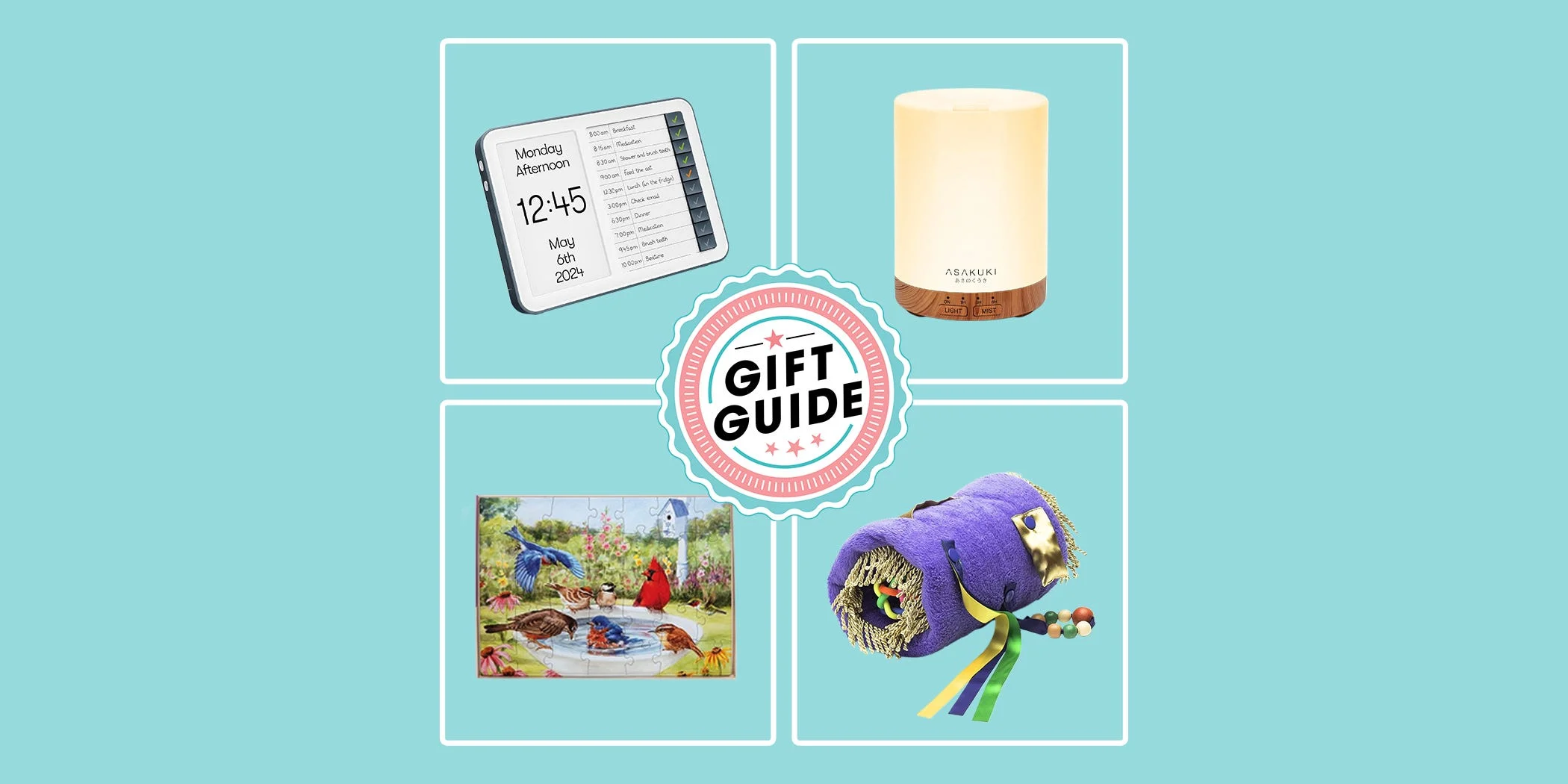
Complicated puzzles with hundreds of small pieces can be overwhelming for people with dementia, but simpler options are often a good fit. These puzzles “help keep the mind engaged without overwhelming it,” Sadarangani says. This puzzle from Relish is specially designed for those with dementia—it features 35 large puzzle pieces and comes with a guided completion box to help them assemble the puzzle. (There are options for 13 pieces and 63 pieces, too!)
Research published in Nature Medicine analyzed brain and activity data in older adults and found that those who had higher step counts also had lower rates of cognitive decline. Exercise seemed to slow the buildup of tau, a hallmark of Alzheimer’s disease, to help slow down the progression of Alzheimer’s disease in people who were at a higher risk of developing the disease. Of course, a particular shoe isn’t going to slow down dementia, but we are always on the lookout for a shoe that has few barriers to use.
To make getting shoes on and off easy, I recommend this pair of Skechers Go Walk Arch Fit N-Joys, which not only tops our list of best walking shoes for its affordability and comfort, but also features true hands-free technology. I recently tested them myself and can attest to the ease-of-use that makes wearing them a breeze, even for those with mobility issues.
Games can make thoughtful gifts for people with dementia as they provide cognitive stimulation and encourage meaningful social connection. This memory game from Keeping Busy is specially designed to stimulate memory recall and promote cognitive engagement for those with dementia—it comes with 18 photo cards featuring vibrant images, laminated templates, and a booklet with discussion prompts to help encourage engaging conversation.
“Music has a profound impact on those with dementia,” Sadarangani explains. “Familiar tunes can help with memory recall and improve mood, even in advanced stages.”
Sadarangani says she’s seen people “light up” and even start singing along to songs from their youth. “A simple, one-button music player preloaded with their favorite songs allows for easy access without confusion,” she says. Though this music player requires a caregiver to upload songs via USB-A or USB-C ports, a simple on/off button allows your loved one to play them with one single touch.
“Sensory items, such as fidget blankets or pillows, offer various textures, buttons, and zippers,” Sadarangani explains. “They provide gentle stimulation, keeping hands busy and creating a calming effect, particularly for those in the later stages of dementia. These items help soothe restless energy and provide a comforting, familiar sensation.”
The popular Twiddle fidget muff has a soft fleece exterior, along with multiple objects your loved one can fiddle with, including an orbit ball, loop of multi-colored wooden beads, textured ribbons, a sealed buckskin crackle pouch, and a hook and loop pull patch. It also comes in animal shapes.
Specially designed for those with dementia, this clock not only displays the time and date in large, easy-to-read letters, but also has a dedicated space for a personalized handwritten task list—and you can also set up customizable alerts to remind them to complete each task. The device is also easy to use with a simple setup and large buttons, too.
A weighted blanket can be a great gift for anyone, including those with dementia, thanks to its many benefits. “The extra weight can offer a soothing effect, mimicking a gentle hug, which is known to alleviate anxiety for some individuals with dementia,” Sadarangani says. This option from Bearaby comes in several size and weight options and is a favorite of Associate Commerce Editor Hannah Jeon. “It’s super soft and breathable, thanks to the chunky-knit design and 100% organic cotton construction,” she says. “Plus, it’s super easy to wash.”
However, this gift might not be suitable for someone with mobility issues—always assess risk and keep in mind whether the giftee can remove it without assistance.
Photo albums are always a great option, according to Sadarangani. “They support reminiscence, which is great for people living with dementia,” she says. “Even if they can’t recall everyone in the photos, these albums can still evoke feelings of familiarity and joy, serving as a way for them to share and relive stories.”
There are many photo album options online, but I like this Popotop one for its large size and soft linen cover that makes holding it comfortable. The album also comes in a range of shades and sizes and can hold pictures, mementos and even personalized writings.
Nature sounds can be soothing to people with dementia, Sadarangani says. “Certain sounds, like birds chirping or waves, are known to soothe,“ she explains. “This might be a comforting addition to their environment.” The Homedics SoundSleep sound machine offers your choice of six sounds, including rain, summer night, and ocean. It can easily be turned on and off with the help of a dial.
Coloring books can “provide gentle mental stimulation and enjoyment” for people with dementia, Gish says. He recommends choosing a book that’s themed around a loved one’s hobbies or interests, like gardening, travel, or animals. This book has large flowers that are easy to color in.
If you’re looking for a splurge gift, Corona-Irwin suggests getting your loved one a tablet preloaded with favorite music, audiobooks, or videos. This “can offer entertainment and engagement,” she points out. The Apple iPad is relatively easy to use and can be packed with helpful apps. You can also use it to FaceTime each other.
Aromatherapy can be soothing to people with dementia. “Essential oil rollers, especially when scents are chosen based on past memories, like lavender from a childhood garden, can bring moments of calm and comfort,” Sadarangani says. UpNature’s popular roller comes in a wide variety of scents, including lavender, rosemary, and a “calm” blend.
“When my husband became bedridden during his diagnosis of dementia, I wanted to give him something to keep him engaged and entertained. I purchased a ceiling projector for him and it fascinated him,” says Sue Ryan, co-founder of The Caregiver’s Journey podcast.
This Happrun smart projector syncs with Apple and Android phones, allowing you to sharing images with a loved one from your phone. It also directly accesses Netflix, Hulu, Prime Video, and more, so you don’t need to set up additional technology. And the voice assistant remote is especially handy for patients who may have trouble clicking buttons.
Cohen says her father was “always cold,” which is why he enjoyed cozy blankets. This option from Cozy Bliss has a soft faux fur feel. It also comes in several shades and sizes, allowing you to choose the option that feels right for your loved one.
TigressPR founder Samuella Becker’s mom lived with dementia for eight years before her death. Becker says that seasonal clothes, like a Christmas sweater or Easter-themed stuffed animal, can be helpful reminders to mark certain holidays. This pajama set from Ekouaer is an Amazon favorite. It’s crafted from rayon and spandex for a soft, slightly silky feel, and comes in several festive, holiday-themed patterns to choose from.
Word searches often come with small letters, but there are plenty of great options in large print. “These are especially good for individuals who are still able to follow some steps, but may be challenged by complex activities,” Sadarangani says. “They provide a sense of accomplishment and satisfaction.” This book of word searches includes 150 easy puzzles that are in a simple layout with extra large print.
“Consider custom puzzles made from family photos or other meaningful images,” Sadarangani says. “Seeing a completed image of something familiar can add an extra layer of reward to the activity.” This 10-pack from Mr. Pen allows grandkids or artistic family members to draw images on top that can be used as puzzles.
This gift can do double-duty for your loved one. “Sensory gifts like soft or textured balls can offer an activity that encourages play with another person,” Corona-Irwin says. They can also double as a fidget toy. this 10-pack from Impresa offers balls in a range of sizes and colors.
We may earn commission from links on this page, but we only recommend products we back.


Discussion
Sign in to join the discussion.