After cough and blood in her sputum led to an SCLC diagnosis, a healthy, never-smoking mother shares how treatment brought her scans to No Evidence of Disease.
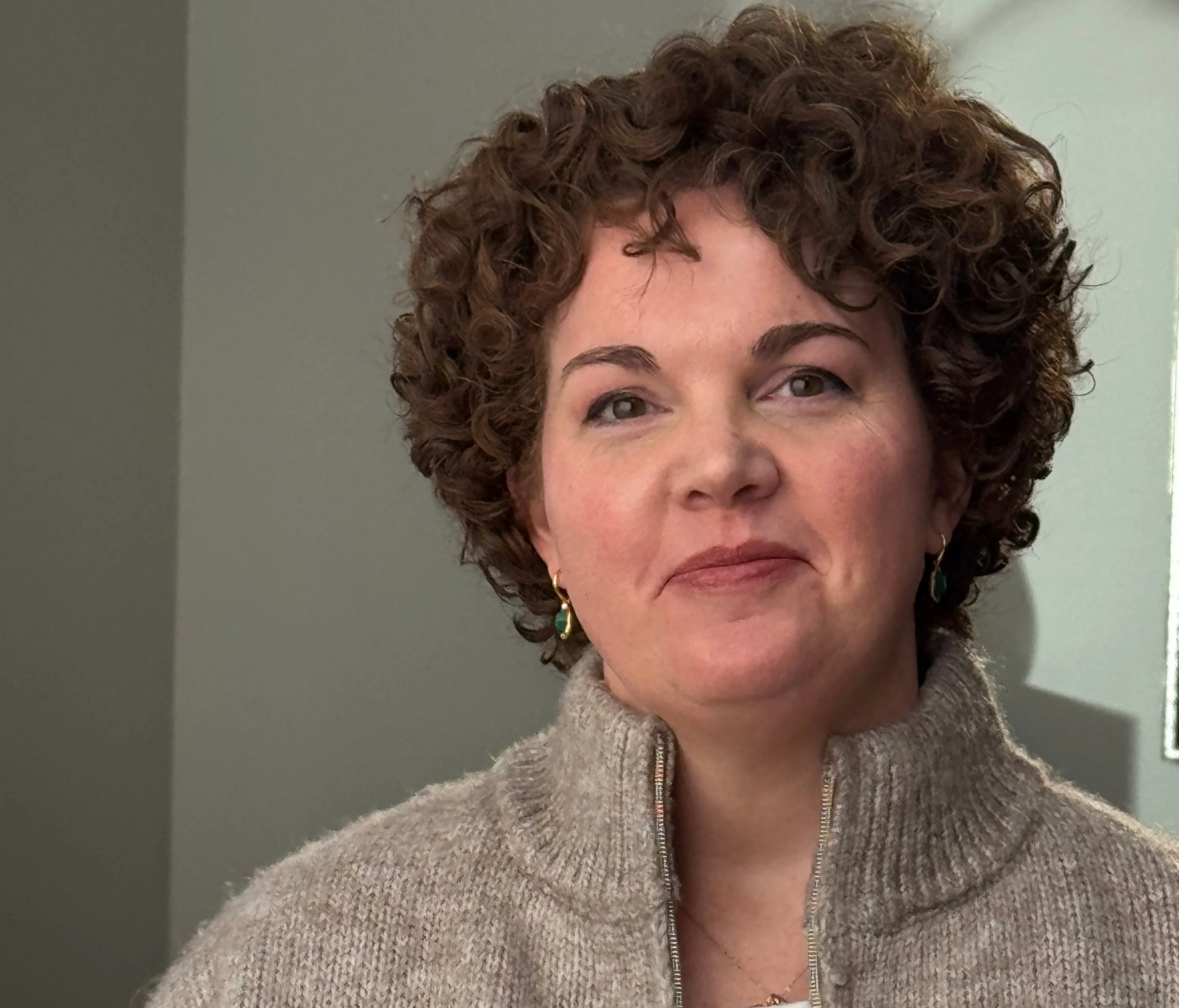
Small cell lung cancer can turn an ordinary winter illness into a life changing diagnosis in a matter of days. That’s what happened to me: I was 41, active, and had never smoked. The treatment later brought my scans to “No Evidence of Disease,” but my doctors haven’t called that remission. The distinction matters when a cancer can return and the future is still uncertain.
Before that winter, my life was full: I led a local nonprofit, was raising two children—then 7 and 10—with my husband, and spent much of our time outdoors in Colorado, taking nature walks, swimming, and caring for our backyard chickens.
A couple of weeks before Christmas in 2023, I heard a crackling noise in my lungs when I breathed. Soon, an occasional cough joined it. With winter bugs going around and my kids sick with colds, I assumed I’d caught something too.
Then, on the morning of December 27, I coughed up blood. I understood that was serious, but the holidays, work pressure, and children home from school left little room to take it in. I suspected pneumonia or a cough that needed medication, so I booked a doctor’s appointment for the following day.
After examining me, my doctor sent me for a chest X-ray. I remember the machine against my chest and thinking, “This seems really extreme.” The image showed something that needed a closer look. That day, I went to urgent care for more tests and a CT scan.
By then I was feverish, exhausted, and foggy. The urgent care doctor told me I had COVID-19 and pneumonia, and that something else was visible in my chest. I remember her saying, “I hate to be the one to tell you this…” But after a full day of appointments and feeling so ill, I couldn’t absorb what she meant.
A few days later, a lymph node biopsy gave us the answer: a pulmonologist called to say I had small cell lung cancer (SCLC). The pulmonologist told me it responded well to treatment. An oncologist I saw a week later gave me a more sobering estimate: people diagnosed with SCLC live, on average, one to two years.
When the diagnosis became real
I was stunned. I’d never smoked, and I’d been healthy and active. A small melanoma removed in my early 20s was my only major health problem. In roughly two weeks, I’d gone from hearing a rattle in my lungs to learning I had one of the deadliest forms of lung cancer.
My husband sat beside me, taking notes as the doctor explained the diagnosis. He’s a strong person, but the news broke him. I reacted differently: I went into work mode, writing things down and asking questions. “I’ll process this and deal with all my feelings later,” I told myself. On the drive home, I opened my laptop and made a PowerPoint for my parents and three siblings.
I wanted to give them the facts and set boundaries, including that I didn’t want relatives arriving at my door without warning. I also wanted them to know I had no regrets. At 41, I felt proud of my life; reaching 45, I told them, would be a miracle.
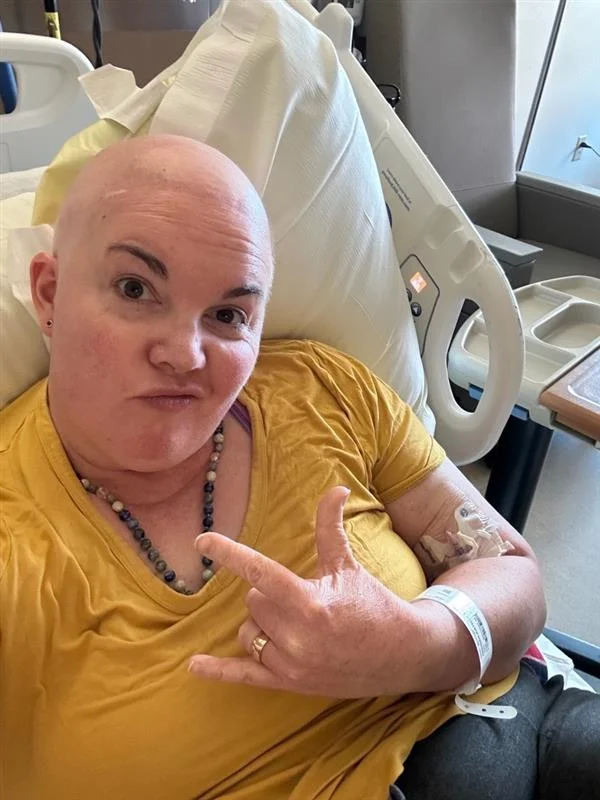
My husband took responsibility for researching cancer treatments and following the news so I could concentrate on healing. I began with six rounds of chemotherapy alongside six weeks of chest radiation. It was hard, but manageable. I lost my hair and found I liked my bald head; my eyebrows stayed, and I was grateful for that small win.
The most punishing treatment came later. Doctors found 30 brain metastases—cancer cells that had spread from the original tumor—and I underwent 10 days of whole-brain radiation. My scalp blistered and my forehead was badly burned. Years later, that skin is still extremely sensitive to sunlight.
Good scans, with a caveat
Follow-up scans and a brain MRI showed the chemotherapy and radiation were shrinking the cancer. I felt elated, proud of my body, and grateful for the people supporting me. Still, SCLC can respond to initial treatment and then return. My family and I enjoyed a reprieve toward the end of summer 2024, but we knew it didn’t mean the danger had passed.
A few weeks later, a chest CT showed new growth. My oncologist had a next step ready: Imdelltra, a recently approved immunotherapy being offered at the University of Colorado Anschutz research hospital. It helps the immune system find and destroy small cell lung cancer cells. My doctor said he’d do what it took to get me into the program.
I received my first dose on October 8, 2024. The infusion took about an hour, followed by two hours of observation because the drug was so new. I would return every two weeks for the foreseeable future. If that time in the treatment chair was the price of remission, I was ready to pay it.
My first scans after starting Imdelltra showed the cancer had shrunk. I held back from celebrating; I’d received good news before and then watched it disappear. After several consecutive scans showed no disease, I asked my doctor what to tell people. He hesitated, then said the most accurate description was consistently No Evidence of Disease. He wouldn’t call it remission yet.
Living with uncertainty
There hasn’t been a single moment when I felt completely healed. My experience doesn’t fit neatly into “I have cancer” or “I no longer have cancer.” We celebrate each clear scan, but the possibility of SCLC returning stays with me.
I remind myself that the survival figures I heard in early 2024 are now out of date, and that my life may follow a different course. I once told my family that reaching 45 would be a miracle. Now I’m less than six months from that birthday.
My long-term outlook remains unknown. I don’t know how long I’ll need Imdelltra, or whether it will keep working. For now, I show up for treatment and focus on what I can manage: enough sleep, good food, exercise, and attention to my thoughts and attitude. Some days I barely think about SCLC. Others, it occupies a lot of space.
The diagnosis clarified what matters to me. I used to wonder why a woman might say raising her children was what she was proudest of. Now I understand. Getting to raise two good, funny kids who are wonderful people is my highest priority. Family is everything.
I stepped away from work during treatment in 2024 and am beginning to reconnect with my professional life. But the goals have changed. Titles and recognition used to drive me; earning another gold star no longer feels meaningful. I care more about what I can give my community and whether I can leave it stronger.
Some parts of me feel as though they burned away. I sometimes think of this as emerging from a “cancer chrysalis”: a difficult change that has left me clearer about who I am and how I want to live. That clarity feels like a gift.
The facts about lung cancer
Lung cancer deserves attention well beyond the groups most often associated with it. Smoking is the leading risk factor, but about 20% of people diagnosed have never smoked. Genetics, air pollution, secondhand smoke, asbestos, and other environmental toxins can also raise risk.
It’s the second most common cancer in men and women, with roughly 229,000 new cases diagnosed each year. It is also the leading cause of cancer deaths. A persistent new cough, coughing up blood, chest pain, hoarseness, shortness of breath, and wheezing can be symptoms. None should be treated as a diagnosis on its own, but persistent or concerning symptoms warrant medical attention.
Screening and treatment depend on the details
Small cell lung cancer (SCLC) accounts for about 10% to 15% of lung cancers and tends to grow faster than non-small-cell lung cancer (NSCLC). Treatment choices depend on the stage and whether the cancer has spread. They may include surgery to remove a tumor, chemotherapy, radiation, and immunotherapy during or after chemotherapy.
Low-dose CT scans can find lung cancer early, when it may be more treatable. Current screening recommendations cover people ages 50 to 80 who smoke now or used to smoke and have at least a 20-pack-year history: for example, one pack a day for 20 years or two packs a day for 10. That eligibility rule leaves many people outside routine screening, including some who never smoked. The risk factors are broader than the screening criteria, so knowing the symptoms and discussing individual concerns with a clinician still matters. More information is available at lung.org.



Discussion
Sign in to join the discussion.