Compression socks may ease leg swelling and discomfort during long shifts, workouts, or travel. Choose a pressure level that fits your needs; ask a doctor before using over 20 mmHg.
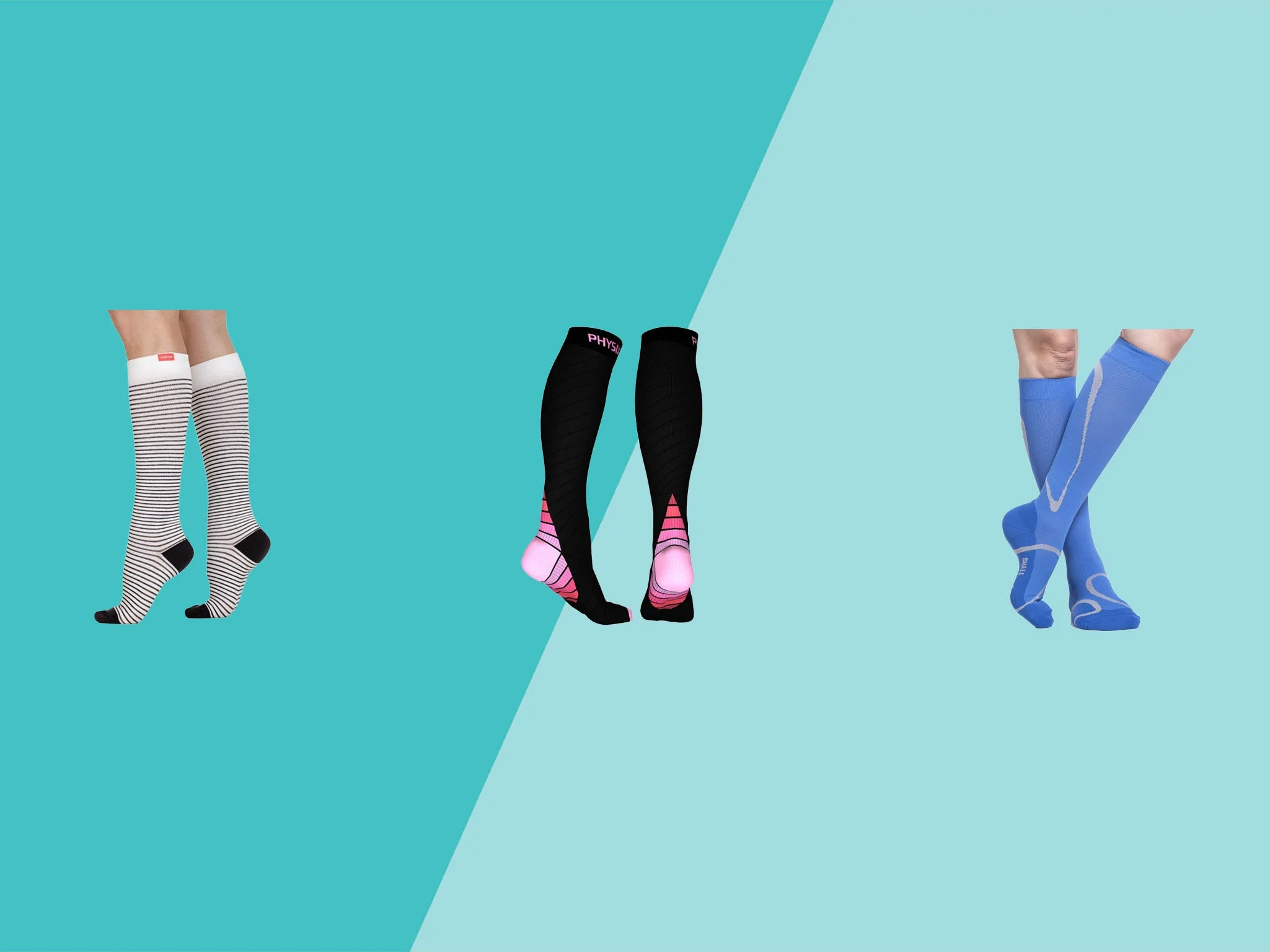
Compression socks are useful when your legs spend hours under strain—whether you’re standing at work, exercising, or sitting through a long flight. The point is straightforward: steady pressure may limit fluid buildup and ease swelling and discomfort. The harder question is how much compression you need, since a higher pressure rating isn’t automatically a better choice.
“Compression socks place constant pressure on the legs to prevent the accumulation of fluid; the compression is thought to help the blood circulate better, which allows more oxygen to get to the tissues,” says Priya Parthasarathy, D.P.M., a board-certified podiatrist in Silver Spring, Maryland, and spokesperson for the American Podiatric Medical Association (APMA). Parthasarathy says many of her runner patients report less muscle fatigue and soreness, which they associate with faster recovery. That’s a useful patient report, though it doesn’t tell us how much benefit every wearer should expect.
If long shifts or hard workouts leave you with aching, heavy legs or swollen feet, compression may help. It can also be useful during travel, and some pregnant people or people with vein-related conditions may benefit. For flights, the concern is that sitting for hours can cause blood to pool in the legs; compression may improve circulation and reduce the resulting swelling and discomfort.
How we chose these socks
We spoke with Parthasarathy and Anne Sharkey, D.P.M., a board-certified podiatrist and founder of Solely Podiatry in Austin. We also tried several pairs and reviewed product specifications, ratings, and customer feedback. The picks below cover different needs, from light everyday support to firm compression. If you’re considering a rating above 20 mmHg, the experts recommend checking with a doctor first.
Compression socks to consider
For a breathable cotton option with medium graduated compression, Vim & Vigr offers a 15–20 mmHg pair, with 20–30 mmHg and 30–40 mmHg versions also available. The sock’s pressure increases from ankle to calf. Its contoured leg and heel, flexible toe pocket, and range of sizes—including wide-calf options—aim for a supportive fit.
Former Prevention digital director Allie Early tested the pair during exercise. She found them soft, breathable, cool, and easy to pull on, with the advertised moderate compression. One tradeoff: the sole lacks the cushioning offered by some competing socks.
For a low-cost multipack, an Amazon bestseller is sold in a three-pair set for $14; an eight-pair pack costs $20. These nylon-and-spandex socks have 15–20 mmHg graduated compression, stretch in all directions, and include a stay-put cuff plus reinforced, cushioned heels and toes. They also come in a range of colors and patterns.
Dr. Scholl’s offers lighter compression, rated at 8–15 mmHg, and carries the APMA Seal of Acceptance for promoting good foot health. That lower pressure may suit everyday wear or people seeking mild support for tired legs and minor swelling. “I usually recommend a lighter compression to begin with,” Parthasarathy says. The nylon-and-spandex fabric is lightweight and breathable; a compressive arch and smooth toe seam are designed to reduce irritation and bunching.
For daily wear, Sharkey recommends Bombas. Its 15–20 mmHg socks use soft, breathable Supima cotton and add cushioning underfoot. A honeycomb band supports the midfoot, which may appeal to people dealing with plantar fasciitis or other arch and heel pain. The brand says they’re suited to travel, running, and long days on your feet. Bombas also says it donates a pair for each pair purchased to its Giving Partners organizations. The brand is also a favorite among Prevention editors.
Sockwell’s merino wool blend brings moisture control, odor resistance, and temperature regulation to a firmer 20–30 mmHg sock. Parthasarathy typically recommends that pressure range for moderate to severe swelling. A lightly cushioned sole, arch support, and seamless toe closure add comfort.
Figs, known for medical apparel popular with nurses, makes a lightweight, breathable compression sock with light 360-degree pressure and padding at the toe and heel. Sharkey says she likes the fabric and designs. Its supportive construction has also earned it a place among options for nurses and people who stand all day.
For medical-grade compression, Sharkey says Sigvaris is her favorite brand for patients. Its Motion High Tech socks provide 20–30 mmHg, a level she recommends for some people being treated for deep venous thrombosis (DVT) or varicose veins. She advises consulting a medical provider before wearing compression socks for those conditions. The pair has breathable, moisture-wicking fabric, a cushioned footbed, and padding around the toe and Achilles tendon. Its sizing accounts for both ankle and calf circumference.
Another bestselling pair uses a breathable, moisture-wicking nylon-and-spandex blend and firm graduated pressure intended to support circulation and limit fluid buildup. It comes in three sizes and several colors. Buyers praise its seamless toe and secure fit, which is designed to stay in place without rolling down during a long day.
Comfort matters, but start with the pressure
For flights and other long travel days, the SB Sox Lite Compression Socks pair a 15–20 mmHg rating—the range experts recommend for travel—with a light, breathable nylon and spandex knit. The pressure is intended to support circulation and ease leg pain, swelling, and fatigue. Their smooth heel and toe, moisture-wicking fabric, and stay-put cuff also address the practical problem of wearing compression socks for hours. A firmer 20–30 mmHg version is available here.
If knee-high socks feel like too much coverage, Dr. Motion’s quarter-length pair offers ankle and arch support, a breathable mesh upper, cushioned heels, and a reinforced seamless toe. They’re sold in six-pair packs with patterned designs. Food Producer Tina Martinez says she wears them for workouts and long shifts, praising their look and supportive feel: “They do feel snug when you first put them on, but not in a restrictive way.” She says she can still move comfortably while lifting or running, and is particularly fond of the strawberry pair.
Here’s the thing: a comfortable fit matters, but the pressure rating deserves more attention than the pattern. Compression socks apply steady pressure to limit fluid buildup in the legs. Podiatrist Parthasarathy says this can help blood circulate and deliver oxygen to tissue, potentially easing edema, heaviness, and discomfort.
The case for wearing them is strongest when you’ll be sitting or standing for a long stretch, when blood can pool in the legs. Research also suggests they may reduce muscle damage and inflammation after strenuous exercise, including a marathon; Parthasarathy says many of her runner patients report less fatigue and soreness. Compression socks may also ease swelling during pregnancy and symptoms linked to varicose veins. For people with deep vein thrombosis (DVT), a healthcare professional may recommend them as part of symptom management.
Parthasarathy wore compression socks daily during pregnancy to help prevent varicose and spider veins. She also wears them at work as a podiatric surgeon, where she spends much of the day standing. “They definitely make my feet and legs feel much less tired,” she says.
Choose the fit for the job
Pressure is measured in millimeters of mercury, or mmHg. Ratings such as 10–20 or 15–20 mmHg are on the lighter end; 20–30 mmHg provides firmer compression. Socks should feel snug, but never so tight that they interfere with circulation. Parthasarathy advises starting with lighter pressure—around 10–15 or 15–20 mmHg—and says moderate to severe swelling may call for 20–30 or 30–40 mmHg. Those higher levels should be custom-fitted and prescribed by a doctor. Ask your clinician what’s appropriate, especially if you have an underlying condition.
Fabric affects whether you’ll actually want to keep them on. Nylon, spandex, cotton, and wool are common choices. If your feet run hot or you’ll wear the socks in warm weather, breathable, moisture-wicking options such as SB Sox Lite Compression Socks or Vim & Vigr Cotton Graduated Compression Socks may be more comfortable. For cold weather, a warmer merino wool option such as Sockwell Elevation Firm Graduated Compression Socks may suit you better.
Coverage is another practical choice. Most compression socks reach the knee, while sleeves cover the calves but leave the feet bare. Quarter-length styles stop around the ankle, as with Dr. Motion Compression Quarter Socks. Pick the length that fits the activity and the coverage you prefer.
Sharkey says people typically wear compression socks for two to eight hours, depending on the activity. That might mean a full workday spent standing, a flight or road trip, or time on your feet while managing swelling or pain. During pregnancy, she advises wearing them through the day and taking them off at night.
The tradeoffs are straightforward: socks may reduce swelling, aching, and leg fatigue, and may help with athletic recovery, but some people find them hot or uncomfortable—especially in warm weather. And they won’t be everyone’s idea of a stylish accessory. People with certain heart conditions, including congestive heart failure, or arterial disease should avoid them unless a clinician advises otherwise.
For everyday wear, travel, athletic recovery, and mild swelling or aches, experts generally point to lighter ratings such as 8–15 or 15–20 mmHg. Compression above 20 mmHg is typically prescribed for specific medical needs. Sharkey says 20–30 mmHg may be recommended for people being treated for DVT, recovering from surgery, or managing moderate swelling or varicose veins. If you have a medical condition or aren’t sure compression is safe for you, check with your healthcare provider first.


Discussion
Sign in to join the discussion.