Experimental peptides attract health claims, but limited human research leaves major questions about safety, benefits and why clinical trials matter.
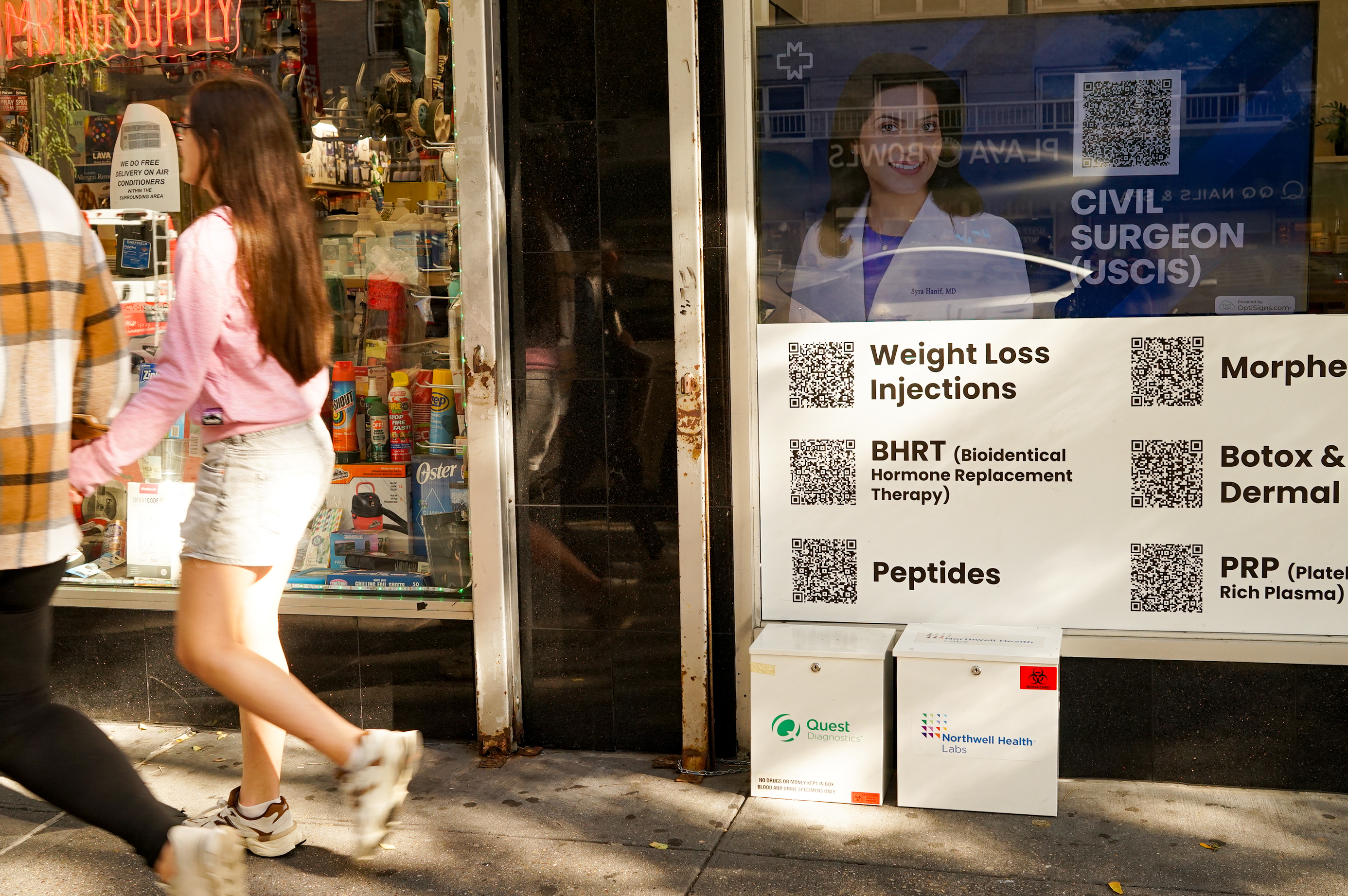
Experimental peptides are being marketed for injury recovery, chronic conditions and body optimization, yet the evidence behind many of those claims remains thin. The central issue isn’t whether peptides could become useful medicines; it’s that consumers are being asked to trust treatments before researchers have established what they do, who they may help or what harms they might cause.
That gap matters as U.S. officials consider making certain unapproved peptides easier to obtain through licensed compounding pharmacies. A temporary access policy appeared on a White House docket on Oct. 14, after FDA scientists had warned at a July advisory meeting that the substances hadn’t been adequately tested in clinical trials. The advisory panel voted to loosen restrictions. The debate has also drawn attention to members’ industry ties: one new appointee, Haleem Mohammed, is chief medical officer at men’s clinic Gameday Men’s Health, which sells peptides. HHS spokesperson Emily Hilliard said all committee members met FDA ethics requirements.
For patients and clinicians, the practical question is simpler than the politics around access: what supports the claims? Four common arguments for experimental peptides fall short of answering it. One point behind the broader debate does hold up: Americans face serious health and affordability problems. But those problems don’t establish that untested treatments are safe or effective.
Calling a substance a peptide doesn’t make it something other than a drug
Gary Brecka, co-chair of the Make America Healthy Again Action committee, has argued on his podcast that peptides aren’t drugs. In a discussion of using them to “help regulate cortisol, improve circulation, all kinds of things,” the distinction doesn’t hold: substances used to treat or prevent illness, or to affect how the body functions, meet the ordinary definition of a drug.
“Peptide” describes a broad class of molecules made from the same building blocks as proteins, but smaller. The human body produces many of them. Insulin, for example, is a peptide; when injected to regulate blood sugar, it’s also a drug. As Jacob Sherkow, a University of Illinois Urbana-Champaign law professor specializing in biotechnology, put it: “Most of the drugs we have had some antecedent in nature.” He added, “Heroin is natural. No one in their right mind would call it not a drug.”
Brecka didn’t respond to requests for comment. His public relations representative, Chris Woodward, said the podcast discussions of health issues weren’t medical advice. That distinction doesn’t resolve the underlying question: claims about a substance’s effects still need evidence.
“Natural” isn’t a safety test
Peptide promoters sometimes describe these substances as safe because they occur in nature, or because the body makes them. Neither claim can establish safety on its own. BPC-157, one of the most popular experimental peptides, was developed after Croatian scientists isolated what they called “body protective compound” from stomach lining and gastric juices. But researchers haven’t found BPC-157 in the human genome, said Katrin Svensson, a peptide scientist at Stanford University. Researchers in Taiwan have proposed that stomach microbes produce it, according to Undark magazine.
Even a substance found in nature can be harmful. “Natural things can be toxic,” Svensson said. Insulin, a naturally occurring hormone, can kill if someone takes too much. And drugs judged safe can still cause side effects. The point of placebo-controlled trials is to measure benefits and harms, including problems that may not show up right away, such as liver damage. Trials can also reveal whether an underlying condition makes an otherwise mild side effect more dangerous.
The FDA is weighing whether to lower restrictions on BPC-157 and five other experimental peptides. None has FDA approval, and they haven’t undergone high-quality clinical trials. Svensson’s lab studies peptides that she hopes to develop into drugs, and she said she’s excited about their potential. But, she added, “you need to show they’re not harmful.”
Promising anecdotes and early studies don’t prove treatment claims
Claims that peptides can heal injuries or treat disease often run far ahead of human research. Kris Wusterhausen, an FDA advisory panel appointee and founder of an antiaging company that sells BPC-157, has said the peptide can reduce acid reflux and treat neurological disorders. He didn’t respond to requests for comment. Peptide advocates also promote treatments for muscle injuries, COVID, inflammatory bowel disease and other conditions.
For BPC-157, the clinical record offers little support for such confidence. A summary published in 2005 described a small trial testing the peptide for inflammatory bowel disease, but left out key information about how the study was conducted. FDA scientists reviewing it called the summary “inadequate.” Another small study reported that knee pain improved in 14 of 16 patients. Without a control group, it’s impossible to tell whether the peptide caused that improvement, whether other factors played a role or whether the pain would have eased over time.
A 2025 review of research into BPC-157 for musculoskeletal injuries urged caution because evidence was lacking. Flynn McGuire, a physical rehabilitation doctor at the University of Utah and an author of the review, said patient anecdotes about dramatic recoveries are less reliable still. He has told patients he won’t prescribe BPC-157 until better studies are available. “People want new things quickly,” he said, “but medicine and science just don’t work fast.”
Lab findings can help researchers decide what to study next, but they can’t establish that a treatment works safely in people. A peptide that stimulates blood vessel growth in a laboratory, for instance, might have unintended effects in the body. Human biology is complex, and many substances that look promising in early experiments fail in clinical trials.
Peptides can be patented, and trials still need a business case
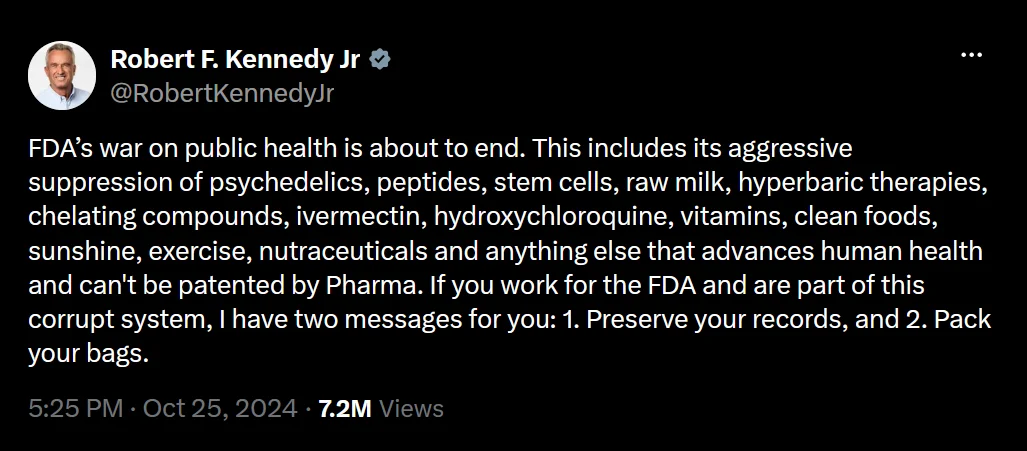
The claim that peptides can’t be patented has also helped fuel suspicion that established medicine has ignored them for lack of profit. Before becoming HHS secretary, Robert F. Kennedy Jr. argued on X that the FDA suppressed therapies, including peptides, because they couldn’t be patented. Researchers analyzing Reddit discussions about peptide therapy found similar claims among users.
But hundreds of peptide patents appear in the U.S. Patent and Trademark Office database, and an early formulation of BPC-157 has been offered for sale under patent rights. Sherkow explained that a naturally occurring substance itself may not qualify for a patent, while a modified version, a formulation that improves stability or a method of delivery may. “All of that stuff is patentable and is being patented,” he said.
Peptide patents can have substantial commercial value. Drugmakers are suing one another over patents related to GLP-1 peptides, the basis of Ozempic and other weight-loss medicines. Morgan Stanley projects that market could reach $190 billion within the next decade. The existence of patents, however, doesn’t mean every peptide will attract funding for clinical trials.
Trials cost millions of dollars. A company has to see a plausible route to FDA approval and a reason the drug could stand out against existing treatments before committing that money. Researchers may also test a candidate and decide the results don’t justify further work, Svensson said. Pinchas Cohen, a gerontology scientist at the University of Southern California, said investors withdrew from trials for MOTS-c, a peptide he helped discover, partly because its proposed use overlapped with GLP-1 medicines. “Investors felt we couldn’t compete with that,” he said.
Making experimental peptides easier to sell could further weaken the business case for trials, researchers argue, because compounding pharmacies could market them for human use without FDA approval. In a letter to the FDA, the pharmaceutical trade organization PhRMA said easing restrictions would “erode incentives for manufacturers to undertake the substantial time and cost required for FDA approval.”
The health concerns are real; evidence still has to come first
Advocates of the Make America Healthy Again movement are right that U.S. health care costs are high and outcomes leave room for improvement. The United States spends more per person on health care than any other nation while ranking below other wealthy countries in life expectancy. In a KFF poll, six in 10 adults said they worried about affording prescription drugs; four in 10 said they had skipped doses or taken other steps because of the cost.
Researchers have proposed ways to address those problems, including limiting drug monopolies and improving access to healthy food. Those goals deserve attention. Selling unproven treatments without adequate studies, however, doesn’t answer the affordability problem or establish that patients will benefit. The next useful step for popular experimental peptides is clear: well-designed human trials that can show whether the promise survives contact with evidence.
KFF Health News is a national newsroom that produces in-depth journalism about health issues and is one of the core operating programs at KFF—an independent source of health policy research, polling, and journalism. Learn more about KFF.This article first appeared on KFF Health News and is republished here under a Creative Commons Attribution-NonCommercial-NoDerivatives 4.0 International License.



Discussion
Sign in to join the discussion.