Patients are traveling to China for cancer drugs unavailable in the US, exposing gaps in trial access and a widening shift in biotech research.

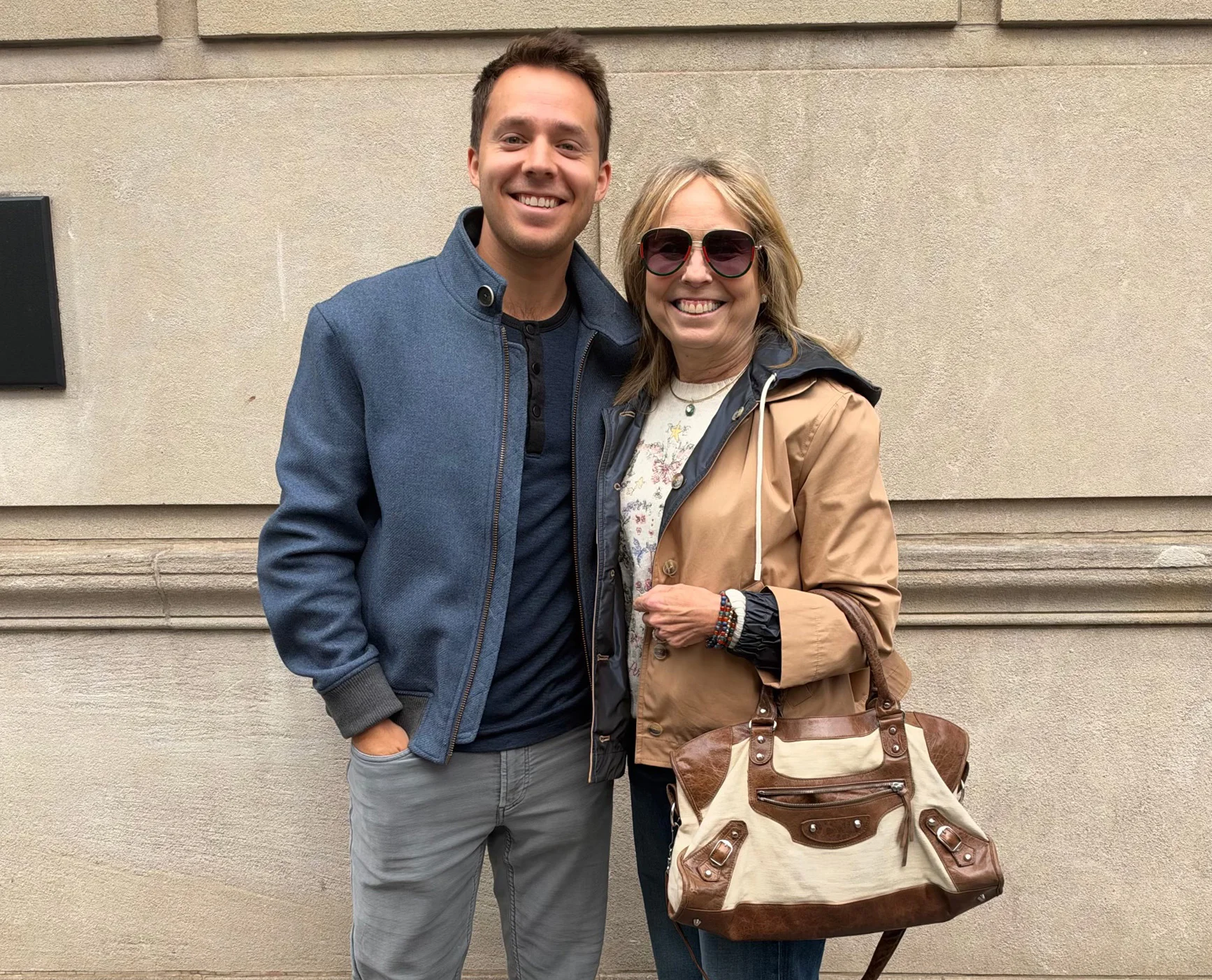
For some cancer patients, the most consequential drug lead may come from China. Debbie Doppelt, a 60-year-old New York jeweler with a rare form of lung cancer, found that a medicine targeting her tumor was available there years before it reached the US market. Her family’s search shows how patients can be caught between fast-moving drug development overseas and limited access at home.
Doppelt’s cancer had spread to her brain after chemotherapy and surgery. She couldn’t join a US clinical trial for another targeted medicine because minor lung scarring made her ineligible. Sunvozertinib, developed by Shanghai-based Dizal Pharmaceutical, had been approved in China in 2023, but the US Food and Drug Administration had not yet approved it.
A doctor suggested to her son Max that the drug could be purchased at a pharmacy in China. Friends and relatives helped the family obtain an initial supply. Max later flew to Shanghai and returned with 26 boxes, which he said cost about $10,000.
“Getting on the plane and bringing the medicine home felt like my life’s purpose,” he said. He believed the evidence for the drug’s effect on brain tumors gave his mother a chance she might not otherwise have had.
A treatment gap patients are navigating themselves
Doppelt’s experience reflects a broader shift in the drug industry. China, once associated mainly with generic medicines and drug precursor chemicals, has become a major center for biotech research. In 2025, it accounted for as much as 46% of new drugs being tested around the world, according to Goldman Sachs research.
That growth is changing where early trials happen and where companies look for new treatments. US pharmaceutical firms are testing drugs in China and striking large agreements with Chinese biotech companies. Patients from the US and Europe are also traveling there to seek treatment or enter trials, including studies of CAR-T therapies, an area where China has become a leading force.
For Doppelt, access was the immediate issue. The FDA had approved amivantamab in 2024 for the mutation driving her cancer, but her son worried about toxicity and whether the drug would reach tumors in her brain. She also tried to enter a Memorial Sloan Kettering trial for zipalertinib, but her lung scarring excluded her. Sunvozertinib was being studied in the US, though the relevant late-stage trial included a chemotherapy-only group. After her cancer had progressed despite chemotherapy, that option did not appeal to the family.
Max said he knows of at least 30 Americans who have traveled to China for sunvozertinib. He described the informal spread of information among patients and families: “No organization or doctor is guiding patients to China, but word gets out.” The FDA approved the drug in July 2025, but it was still unavailable in the US market as of mid-October. AstraZeneca signed an agreement with Dizal on Sept. 1 to distribute it worldwide and said it planned to make the medicine available in the US by early 2027.
Doppelt has continued working in the diamond business she runs with her husband. She said the drug, alongside radiation and dose adjustments, had kept most of her cancer at bay for about 19 months. She’s grateful for the support around her and for being able to afford treatment. Her case also underscores how uneven access can be: some patients have the money, contacts and time to pursue a treatment abroad; many do not.
Trial speed is shifting biotech investment
The industry change behind these patient journeys is not limited to China’s supply of medicines. Investors and biotech companies are directing more early clinical work to countries where trials can begin faster. Sam Rasty, a biotech executive, said the COVID-19 pandemic exposed weaknesses in China’s vaccine and drug development, prompting an overhaul that has since reshaped the sector. He pointed to China and Australia as places where regulatory systems can allow first-in-human studies to start more quickly than in the US.
That pace is affecting how American companies operate. Steve Potts, chief executive of Breakthru Medicine, said US biotech leaders increasingly keep early research under wraps, concerned that competitors could move faster with ideas discussed at conferences or financing meetings. At a gathering he attended in May, nearly all 60 biotech CEOs expected to run phase 1 trials in Australia, Europe or China. Five or ten years earlier, he said, most would have conducted those studies in the US.
Heidi Overton, President Donald Trump’s nominee to lead the FDA, criticized the agency’s “slow and prohibitive” requirements during her Sept. 24 confirmation hearing. She said that losing clinical trials overseas could weaken US health security. The administration’s Operation TrialBlazer, launched in June, aims to speed some FDA processes and attract trials back to the country. The Department of Health and Human Services said the initiative draws on Australian processes begun in 1991.
HHS spokesperson Emily Hilliard said the effort is intended to accelerate trials and approvals so patients don’t feel pushed to seek care abroad. She also cautioned that medicines obtained outside the US regulatory system can carry safety and quality risks. The practical tension is clear: faster access can matter urgently to a patient, while a treatment’s quality and risks still need careful scrutiny.
Industry policy and patient needs pull in different directions
Some US lawmakers want to limit Chinese companies’ role in American biotech. In June, Rep. John Moolenaar, a Michigan Republican who chairs the House Select Committee on the Chinese Communist Party, co-sponsored a bill with Rep. Debbie Dingell, a Michigan Democrat. It would require Treasury Department clearance for US pharmaceutical deals with Chinese firms.
Others argue that restricting scientific ties could slow progress against disease. Peter Kolchinsky, managing partner of RA Capital Management, which invests in Chinese biotech, said collaboration can serve patients even when the countries have wider disagreements. “We may be adversaries in many areas, but we’re not competing with them to cure cancer. We are collaborating with them to cure cancer,” he said.
Max Doppelt has also tried to make trial access easier to navigate. After leaving his computer engineering job, he started a company that uses artificial intelligence to combine research and drug-company information with a patient’s health records, helping identify relevant clinical trials. About 300 patients have used the app so far, all of them lung cancer patients. Max doesn’t charge them.
The effort addresses a persistent gap: about 7% of US cancer patients take part in clinical trials, according to research published in the Journal of Clinical Oncology. Kent Thoelke, chief executive of Paradigm Health, which offers software to help hospitals and clinics enroll trial participants, said broader trial participation could also support the US drug industry.
Trial matching can help patients find options, but a promising match isn’t a guarantee of benefit. Max said sunvozertinib appears to help about half of the people taking it. A 70-year-old woman he assisted obtained a six-month supply in China, then learned after three months that the cancer had spread.
The next treatment search is already underway
Max expects his mother may eventually stop responding to sunvozertinib. “She has a metastasizing cancer that will learn to bypass the drug,” he said. He continues to review possible trials with her, including one for firmonertinib, a drug approved in China in 2021 that is under study in the US and elsewhere.
CAR-T therapy is another possibility. Researchers at the University of Colorado are developing an approach intended to increase the immune system’s attack on mutations like those driving Doppelt’s cancer. Kyle Concannon, who leads part of that work, said new tools for assessing toxicity and how therapies spread through tissue can add time, cost and risk to development. Better detection of potential harms matters, he said, but so does the danger of leaving a serious disease untreated.
Marcia Horn, chief executive of the International Cancer Advocacy Network, said patients and advocates will keep considering Chinese treatments when those drugs are approved there but unavailable in the US. Max would rather see the medicines his mother needs developed at home, yet he opposes shutting Chinese biotech out. For families facing advanced cancer, the next treatment may come from wherever research moves fastest—and access will depend on whether patients can find it in time.
KFF Health News is a national newsroom that produces in-depth journalism about health issues and is one of the core operating programs at KFF—an independent source of health policy research, polling, and journalism. Learn more about KFF.This article first appeared on KFF Health News and is republished here under a Creative Commons Attribution-NonCommercial-NoDerivatives 4.0 International License.



Discussion
Sign in to join the discussion.