A new temperature-sensing patch developed by PhD student Marah Alassaf could make breast cancer detection more accessible and less invasive.
Marah Alassaf, a PhD student at the University of Bristol, is pioneering an electronic skin patch aimed at improving the comfort and accessibility of breast cancer screenings. The ultra-thin device adheres to the skin and monitors localized temperature fluctuations, which can signal the early presence of tumors. Alassaf states, “The goal is to create a convenient, non-invasive tool for earlier cancer detection.”
Understanding Temperature Changes
One challenge in detecting breast cancer is that cancer cells proliferate rapidly, leading to increased blood flow and metabolic activity, which subsequently raises tissue temperature. These temperature changes can be as minor as 0.2°C, necessitating a highly sensitive detection device. Alassaf emphasizes that a single temperature spike isn't sufficient; instead, the patch will analyze prolonged patterns of elevated temperature across time.
“The user will wear the patch for an extended period. We’ll be looking for consistent patterns indicating a temperature increase in a specific region, which would trigger further investigation,” she elaborates.
Patch Mechanics
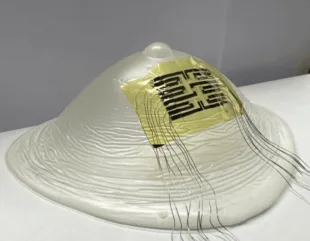
The current prototype Alassaf has developed is a multilayered device made from a specialized plastic called polyimide, along with gold and chromium electrodes and carbon nanotubes. These elements transform subtle temperature changes into electrical signals that can be visualized as thermal images or heat maps. The patch includes nine ultra-flexible sensors, and as Alassaf explains, “A heat map resembles a chessboard, showing precisely which part of the patch detected an increase in temperature.” Consistently warmer areas would warrant clinical follow-ups.
Future Directions for Development
To date, Alassaf has successfully tested the patch on silicone breast models that can simulate temperature changes. The next phase involves real patient trials to assess the patch's effectiveness in detecting temperature variations and potential tumors. Enhancements are also planned to improve accuracy and usability, including the addition of more sensors and refining the signal processing algorithms.
Currently tethered to a computer, the patch will eventually transition to a wireless version. This iteration aims to process images autonomously and synchronize with a smartphone app for real-time data monitoring. Physicians could then review these results to decide on any necessary follow-up tests.
Alassaf stresses that the patch is not designed to replace conventional medical practices but rather to complement them. “It’s an additional tool that enhances existing diagnostic methods, allowing some evaluation to take place in the comfort of patients’ homes,” she remarks.
Researcher's Journey to the Patch
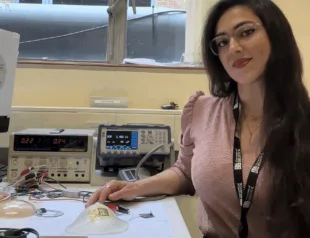
Alassaf’s path to this groundbreaking project was deeply personal and shaped by her multidisciplinary background. While pursuing her undergraduate degree in engineering in Syria, several acquaintances were diagnosed with breast cancer at late stages, which spurred her to consider how technology could aid in early detection.
“That experience truly motivated me to explore the intersection of engineering and medicine, particularly in cancer diagnostics,” she reflects. Following her undergraduate work, she earned a master’s degree in advanced microelectronics and then pursued a PhD in digital health in Bristol under Dr. Faezeh Arab Hassani. “I wanted to integrate my engineering expertise into medical applications, especially in cancer detection,” she notes, highlighting her unique blend of skills that underpins the development of the patch.
If successful in clinical trials, this patch could significantly alter the breast cancer screening process, especially in regions lacking access to conventional diagnostic resources.
Dr. Iain Foulkes, Executive Director of Research and Innovation at Cancer Research UK, underscores the importance of such advancements: “Developing new methods for earlier detection aligns with our mission to combat cancer. Though this research is at an early stage, the temperature-sensing technology shows promise as a supplementary tool within existing screening practices, potentially enabling earlier detection of breast cancer, especially in areas with limited access to mammography.”
Discussion
Sign in to join the discussion.