Sensitive skin can react to fragrance, baking soda, or aluminum. Learn how to choose a gentler deodorant and patch test before use.
Why sensitive skin makes deodorant shopping harder
Choosing deodorant for reactive underarms involves a tradeoff: you’re trying to control odor without triggering itching, redness, or a flare-up. Ingredients that cause irritation vary from person to person, and “natural” on the label doesn’t guarantee a gentle formula.
We may earn a commission from links on this page, but we only recommend products we back. Why Trust Us?
If you have sensitive skin, you may already know how frustrating it is to find products that don’t cause breakouts or itchy skin. Underarms can be especially tricky: deodorants manage body odor, while their ingredients may irritate delicate skin. The picks ahead focus on gentler formulas, though your own skin’s response still matters.
First, decide whether you want a deodorant or an antiperspirant. A deodorant masks or neutralizes odor; an antiperspirant reduces sweat production. Aluminum-based antiperspirants can be more irritating for some people with sensitive skin, but going aluminum-free doesn’t eliminate every concern. Natural deodorants may still contain baking soda or essential oils, both of which can bother some users.
Debra Jaliman, M.D., a board-certified dermatologist and author of Skin Rules, advises avoiding ingredients known to irritate your skin. But it’s not always obvious which ones those are without allergy testing. Sharleen St. Surin-Lord, M.D., a board-certified dermatologist and founder of Visage Dermatology and Aesthetic Center, recommends testing a small amount on your arm and waiting 24 hours for a reaction before trying the product on your underarms.
How we chose these deodorants
We spoke with dermatologists about what to look for and considered expert recommendations alongside editor-tested products, online reviews, ratings, and product specifications. Our sources included Debra Jaliman, M.D., author of Skin Rules; Sharleen St. Surin-Lord, M.D., based in Maryland; Susan Bard, M.D., of New York City; Rinah Allawh, M.D., based in Pennsylvania; Joshua Zeichner, M.D., director of cosmetic and clinical research in dermatology at Mount Sinai Hospital in New York City; and Hadley King, M.D., based in New York City.
Standout options for different needs
Vanicream’s unscented deodorant is a notable option for people trying to avoid several common irritants at once. Susan Bard, M.D., says its dermatologist-tested, water-based gel has five ingredients and contains no aluminum, alcohol, baking soda, parabens, fragrance, or formaldehyde-releasing preservatives. That short formula may appeal if your skin reacts to a long ingredient list.
For a more affordable antiperspirant, Bard recommends Almay’s fragrance-free formula. It offers strong sweat protection, rolls on clear to avoid chalky marks, and includes moisturizing ingredients. The tradeoff is that it’s an antiperspirant, so it contains aluminum.
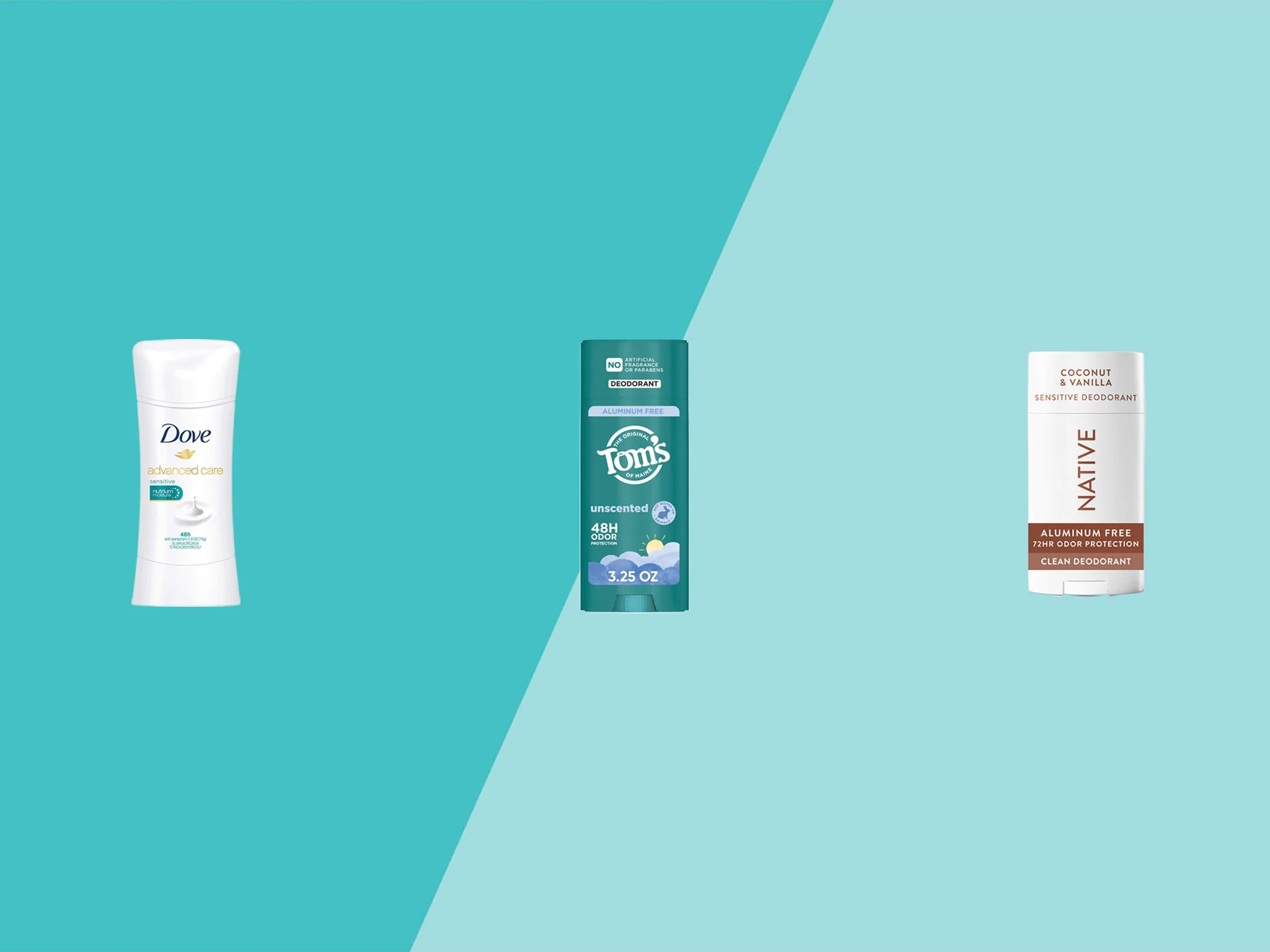
Native’s sensitive-skin formula is another aluminum-free choice. Jaliman says she uses the brand herself because she has allergies, and points to tapioca starch for dryness and shea butter and coconut oil for moisture. It’s free of baking soda and parabens and comes in several scents. Native is also Prevention’s pick for the best natural deodorant.
What an editor says: Associate Commerce Editor Hannah Jeon liked Native’s lightweight, hydrating feel, saying it went on smoothly without feeling sticky or heavy. She also praised its fresh scent and said it kept her feeling fresh throughout the day.
Dove Advanced Care may suit people who want odor control and sweat protection with added moisture. Allawh says the alcohol-free formula includes castor oil, sunflower seed oil, and dimethicone, ingredients also found in Dove moisturizers. It contains aluminum to reduce sweat and a light fragrance.
What an editor says: Senior Commerce Editor Charlotte Finigan says she has used Dove Advanced Care for years. After struggling with underarm eczema, she found it was the only deodorant she tried that didn’t leave her itching all day. She describes it as soothing and moisturizing while still controlling odor.
Vanicream also makes a clinical-strength antiperspirant for people who want to reduce sweat. Unlike the brand’s regular deodorant, Vanicream Antiperspirant Deodorant contains aluminum, but Allawh says it avoids common irritants including fragrance, parabens, and preservatives.
Kosas takes a different route: its deodorant uses alpha hydroxy acids (AHAs) to lower underarm pH, making the area less hospitable to odor-causing bacteria. The acids may also brighten and exfoliate skin and improve the appearance of ingrown hairs. The formula is aluminum-free, baking-soda-free, and free of synthetic fragrance, with aloe vera and hyaluronic acid. It comes in two scented versions and an unscented option, in a lightweight serum that applies with a cooling roller ball.
Allawh also recommends Tom’s of Maine for its unscented, affordable, widely available formula. It contains no aluminum or preservatives. The company says 10% of profits go to charities supporting children’s health, education, and the environment. If you prefer fragrance, it also comes in scented options.
Three aluminum-free options, with different trade-offs
Nécessaire’s The Deodorant pairs a polished design with an acid-based approach to odor control. Dermatologist Joshua Zeichner, director of cosmetic and clinical research in dermatology at Mount Sinai Hospital in New York City, says its mandelic and lactic acids lower the skin’s pH under the arms. That makes conditions less hospitable to odor-causing bacteria, which break down sweat and produce odor. The mechanism is more interesting than the packaging: this formula targets the bacteria involved in smell rather than blocking sweat.
For sensitive underarms, Hadley King, a board-certified dermatologist in New York City, points to Hello’s Aluminum Free Deodorant with shea butter. Shea butter, triglycerides, coconut oil, cocoa seed butter, and sunflower seed wax help condition delicate skin, she says. The dermatologist-tested formula contains no aluminum, parabens, phthalates, dyes, or baking soda, and comes in several naturally scented versions.
Schmidt’s takes a different tack: charcoal absorbs sweat, while magnesium’s natural antimicrobial action helps reduce odor-causing bacteria, according to Dr. Zeichner. The texture can feel gritty at first, but reviewers say it softens quickly with body heat. Alongside Charcoal & Magnesium, the range includes Rose & Vanilla and Bergamot & Lime, among other scents.
Choose by function and skin response
Here’s the distinction to keep in mind: deodorants address odor by neutralizing odor-causing bacteria; antiperspirants reduce wetness by using aluminum-based salts to plug sweat glands. Antiperspirant may suit a long workout or physically demanding workday, but aluminum can irritate sensitive skin. If that’s a concern, avoid clinical-strength versions, which contain more aluminum, and consider deodorant instead.
Ingredient reactions vary, so a label can’t predict every rash or breakout. Look out for ingredients you already know bother your skin, and consider formulas with soothing moisturizers such as shea butter or aloe vera; King says these may help offset irritation from other ingredients.
Not sure how your skin will react? Dr. St. Surin-Lord recommends applying a small amount to your arm and waiting 24 hours. If there’s no reaction, you can try it under your arms. It’s a small test, but a useful one when a product will be applied to sensitive skin.
About the writers
Hannah Jeon is an Associate Commerce Editor at Prevention, covering expert-led commerce stories about health, beauty, and wellness. She previously worked as an Editorial Assistant at Good Housekeeping and earned a bachelor’s degree in creative writing and psychology from Johns Hopkins University. Outside work, she seeks out new food spots in New York City and takes photographs.
Lauren Krouse covers domestic violence, trauma, and mental health. She wrote The Ties That Harm: Understanding Sibling Abuse and Finding a Path Toward Healing. Follow her on Substack and Instagram.
Prevention may earn commission from links on this page; it recommends products it stands behind.



Discussion
Sign in to join the discussion.